• Skip to primary navigation
  • Skip to main content
  • Skip to primary sidebar

Top Air Purifier Reviews

  • Buyers Guide
  • Brands Guide
  • Health
  • Technology
  • FAQ
  • Resources

john

Blueair 503 Air Purifier Review

April 15, 2021 by john

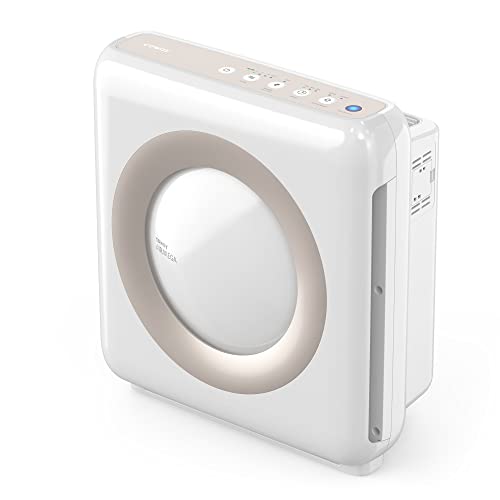
The Blueair 503 home air purifier is more than very economical, more than highly functional, and more than ultra stylish. It’s all those things, but it’s more than the sum of its parts.

Physical Design

The Blueair 503 features a Scandinavian minimalist case you either love or hate. I love it. For appliances, I always prefer to have a case that doesn’t clash with the home décor and this one would fit in any home environment.

At a very compact 26″ high x 20″ wide x 13″ deep you won’t have to scratch your head over where to put it, either. If you don’t like your first choice you can easily move it; it weighs only 35 lbs. That’s light enough to be transportable without being so light it tips over from the first not-so-gentle swish of a dog’s tail it encounters.

At the same time, under that stylish cover is a bevy of supremely functional features.

Clears A Ton of Air

The ability to clear a 580 square foot area a full five air changes per hour is just the most basic reason why this air purifier gets high marks. At only four changes per hour that number increases to 640 square feet. But if you have a space up to 1190 square feet it will still give you two air changes per hour.

That air-cleansing ability can be quantified in another way, using the industry-standard CADR (Clean Air Delivery Rate) numbers. They’re usually listed according to how they handle three main home pollutants: Pollen, Dust and Smoke.

  • 375 Pollen
  • 375 Dust
  • 375 Smoke

The technical definition of CADR is a little complicated, but it’s easy to understand the numbers by comparison. Just look at the figures for other models/brands and you’ll see the above CADR ratings are excellent.

The net result is that nearly any home room will be kept pristine, free of allergens of nearly any sort. Among those is a whole laundry list of compounds, including dust, pollen, mold spores, animal dander and even many airborne bacteria and viruses.

3-Stage HEPA Filtration System, Highly Effective

The Blueair proprietary filter system is at the base of that superior room air purifying ability.

Stage 1 starts with a set of “Ion Brushes” as a pre-filter, a distinctive feature of this home air purifier. The fancy name aside, negative ions are generated in a special chamber. That causes many common household allergens to get attracted to the next stage.

Stage 2 consists of Blueair’s proprietary HEPA filter system, a design it calls HEPASilent. The name may be a little silly – all HEPA filters are silent. But whatever they call it, it really works. The honeycomb houses internally three separate filter layers, providing in-depth air cleansing.

The first layer traps larger particles like larger dust grains and pollen. The second and third trap smaller particles like bacteria and some viruses (down to 0.1 micron). Since the HEPA filters are made of water-repellant polypropylene, there’s no need to treat them with bactericides to keep the filter from encouraging growth inside the unit.

Unfortunately, there’s no Carbon Filter in the base model, a drawback that should motivate buyers to look closely before buying. They’re not absolutely necessary in the average home, though. They help capture certain volatile organic compounds like smoke, paint fumes and household cleaning products. Judge according to your circumstances.

For those who really need that, there is an optional SmokeStop filter set that you can use instead of the original particle filter set. It does include 3 activated charcoal filters that trap a range of compounds. It can clear second-hand smoke in minutes. It’s so quick and effective most people probably won’t even sense their introduction into the room.

Those optional filters offer a combined ability to trap both particles and gases. They do that with an unusual material: a coconut-shell activated carbon that’s impregnated with a solution of potassium iodide, potassium hydroxide, and phosphoric acid.

Maintenance, Amazingly Easy

The manufacturer recommends changing the filters every six months. Whether that’s necessary or excessively conservative will really depend on your sensitivity and your particular environment. For some who are truly sensitive, that’s good advice. For others, once per year or longer will be fine.

When it is time to change them the filter swapping procedure is both moderate-cost and very simple. You can extend their life and save money by vacuuming them, easy to do thanks to the polypropylene material.

Whatever the price, you won’t struggle changing them. You just flip up the top, pull out the old ones, and insert the new ones. Clean disposal is just a matter of dropping the used ones into a plastic bag to prevent allergens being re-introduced into the air. Of course, if that happens it’s not a disaster; the Blueair 503 will just sweep them right out again.

Noise Levels and Electricity Consumption, Truly Low

The usage-friendly design continues with a set of very welcome low noise levels.

At the lowest speed the Blueair 503 generates only 32 dB while pumping out 88 cfm (cubic feet per minute). Speed 2 is only marginally louder at 37 dB but generates substantially more air at 117 cfm. Speed 3 is noticeable at 49 dB while pumping a whopping 247 cfm. Speed 4 is off the charts in air – 450 cfm – but still a livable 66 dB.

The 503 uses only 120 watts at the highest setting and a negligible amount (35 watts) at the lowest. You won’t have to worry about the electric bill with this model.

There is one minor design weakness: the controls are manual rather than electronic. That’s unlikely to introduce any change to the unit’s MTBF (Mean Time Between Failure). Both methods are highly reliable and long-lived these days. But we’ve all become accustomed to associating electronic controls with superior design. Let your taste be your guide here.

Summary

The Blueair 503 home air purifier has fewer filter stages than many competing models. Fortunately, because of its materials, design, and ability to pump tons of air, it doesn’t seem to need them. Tons of clean air very quick and all the time is proof of that.

Filed Under: Air Purifier Advice, Rated

Rabbit Air MinusA2 SPA-700a Air Purifier Review

April 15, 2021 by john

For an air purifier with such a mousey name, the Rabbit MinusA2 SPA-700a cleans air with a lion’s strength. Featuring superb CADR numbers, a customizable six-stage filter, and ease of operation on top of it all, it’s a real carnivore to dirty air.

Performance and Stats, Fearsome

CADR stands for Clean Air Delivery Rate. It’s an objective measure of how well an air purifier removes pollutants and potential allergens from your environment.

There are often different figures given for different types of problems. The SPA-700a has some impressive stats in all the areas. That is 193 for smoke, 201 for pollen and 200 for dust.

But those numbers can be fudged if they’re given for, say, a very small room. The SPA-700a’s numbers are for a 700 square foot room (with standard ceiling height of eight feet, two air changes per hour). That’s over 26ft by 26ft, very good.

Given the 47-187 CFM (cubic feet per minute) air volume processing stat, that isn’t too surprising. Air is drawn in a full 360 degrees around the front panel and expelled upward at the back of the unit. That ensures the device isn’t simply filtering the air swirling around itself but working on your room air at maximum efficiency.

But there’s more than a powerful fan at work here.

6-stage Customizable Filtration System, Elimination in Depth

The Rabbit Air MinusA2 has a customizable six-stage filtration system that is among the best available at any price.

In stage one the washable silvered pre-filter removes large particles, pet hair, dust, and even mold from the air. The silver also helps kill bacteria.

Next in stage two, there’s a medium filter to remove bacteria, pollen, smaller dust particles, and smaller mold spores.

That’s followed in stage three by Rabbit’s proprietary BioGS HEPA filter that eliminates fungus, more bacteria, dust mites, pollen, and other allergens. It even gets rid of certain household odors. Smaller dust particles don’t survive the journey and tobacco smoke, sulphur dioxide, and animal dander are eliminated.

Then in stage four there’s an additional custom filter that kills common household germs, along with still more mold, pet dander as well as many viruses.

It even tackles some pet odors, along with a range of potential toxins. Gasses from outgassing plastics get absorbed. Tobacco smoke is eliminated. Even VOCs (volatile organic compounds) like Formaldehyde are quashed.

Even better, you get to choose the custom filter that is best for your personal circumstances and environment. You can select either a Germ Defense, Pet Allergy, Toxin Absorber, or Odor Remover. All of them do a little of each, but different ones are designed to focus on your main concern.

The Germ Defense filter, for example, is especially adept at trapping airborne bacteria, mold spores, and particles that carry viruses through the air. For those with low immune resistance – babies, the elderly, or just the genetically unlucky – the ginkgo biloba extract on the surface helps reduce the amount of any influenza virus that might be present.

Next in line in stage five is the Activated Charcoal filter, which goes on to remove any remaining tobacco smoke in the air stream. It goes to work trapping additional household odors, including cooking odors. Make fish in the evening and by bedtime, the smell is gone. Clean your kitchen floor with ammonia-based cleaner in the morning and you won’t smell it by lunchtime.

In the final air-cleansing stage six a safe Ion Generator creates charged particles that are pushed out into the exhaust air. Those tend to attract all sorts of nasty particles in the air, which then fall to the floor or float to wall surfaces.

Behind those filters is that powerful direct current motor, a brushless design to ensure quiet operation and long life.

Maintenance

The pre-filter is a permanent filter and does not need to be replaced. Clean it once every month by running the brush attachment of your vacuum cleaner along the filter or by washing it gently with lukewarm water.

When the filter replacement indicator lights up it’s time to replace the other filters in the MinusA2. Depending on use and the air quality in your indoor environment, the life span of the filters will vary from 1 to 2 years.

Replacement filters can be bought in a handy all-in-one filter replacement kit – about 75 currently. Only make sure you know your custom filter! There’s a kit available for each of the 4 custom filters. The filters are interchangeable, too, so you can order more than one (or all) and swap them out from time to time. It’s ultra easy to do.

Cleaning the particle sensor with a damp cotton swab from time to time is no effort. A simple wipe with a clean cloth of the mood light lens, the air intake and outlet can be done when a visual inspection shows the need, which is not often, only about every 3-6 months. You won’t need more than 15 minutes or so to do everything.

Operation – Quiet, Easy, Low Cost, and Informative

The SPA-700a sips electricity. It consumes 47 watts at high speed, and only 7 watts at silent speed. Even at full blast, that’s less than a 60-watt light bulb. At average utility rates, that represents less than a couple of dollars per month to run the air purifier.

There are five separate speeds and the unit automatically selects the lowest speed needed, based on what it senses. You can set the speed manually, if you prefer, though. The noise levels are very modest for a unit that is so effective. Depending on the fan speed, it ranges from 20.8-45.6 dB. At the low end, you’d have a hard time hearing it operate from across the room. Even at the high end, you can comfortably listen to the TV with the MinusA2 going full tilt.

For all that power, it doesn’t way a ton: 19.4 lbs. That’s light enough to move around the house wherever you want, but hefty enough to prevent it tipping over at the lightest touch. That’s always handy for those who have cats who never tire of finding new things to rub against.

The stylish case with mood light is not huge, but not small either: 20″ high x 21.4″ wide x 7″ deep. It’s a bit on the wide side, but that shallow depth means you can place it near a wall, out of the way and not fear brushing against it or having to move around it. There’s even an optional wall-mount kit, if that’s your preference.

You can see at all times what the unit is doing, thanks to a number of indicator lights on the front panel. The lights are opposite the easy-to-understand buttons. The unit is easy to operate from across the room, too, thanks to the included remote control.

Summary

The Rabbit MinusA2 SPA-700a home air purifier is one of the most efficient and effective models on the market today. That’s chiefly thanks to excellent design and quality manufacture of its filtration system. But its operating characteristics are also highly impressive. It won’t roar when you use it, but you might want to give a joyful shout.

Filed Under: Air Purifier Reviews, Rated

Winix FresHome P450 Air Purifier Review

April 15, 2021 by john

To these old ears the name Winix FresHome P450 sounds more like a classic airplane than a contemporary air purifier. They do have one thing in common, though. They both achieve their purpose with superb technology.

Basic Specs

The Winix P450 is one of the latest models from this relatively new air purifier manufacturer. Here, Winix shows they’ve learned a lot very quickly.

Those lessons learned start with a slick, stylish case that makes for good furniture along with good function. The housing measures 18.9″ wide x 25.6″ high x 11.8″ deep, making this rectangular model possibly a bit large for those who are space constrained.

For everyone else, it’s perfect. It weighs 18.7 lbs, making it among the lighter high-power, moderate-to-large-space covering models around. The only potential problem with the design here is the location of the air intake; it’s on the side of the unit. That can work great if you put it in a place that has adequate room.

If you have to place it too near a wall, though, it can hinder the ease of air flow. Making the motor work too hard to draw in dirty air will necessarily reduce the efficiency of the purifier. On the upside, the front vent pushes fresh air directly into the room.

Power, CADR, Coverage Area and Noise Levels

Inside that case it packs both a lot of air-pushing power and air-cleansing ability. Four different fan speeds drive air at CFM (Cubic Feet per minute) rates of:

  • Quiet: 50
  • Medium: 110
  • High: 175
  • Turbo: 290

The results are CADR (Clean Air Delivery Rates) that are quite good, among the highest around at this price point.

  • 343 Pollen
  • 298 Dust
  • 291 Smoke

Those numbers are on the high side of what the company has offered on models in the past, making this among the most powerful models it has offered to date.

Those levels will take care of the rated room area – up to 450 square feet – with room to spare, so to speak. For the math challenged, that’s a room a little over 21 feet on a side. So, even those with substantial living rooms can enjoy clean air all day and night. One qualification, though. Those CADR and coverage numbers invariably assume a standard ceiling height – 8 feet.

Fortunately, for all that air volume and cleansing ability, you don’t have to suffer with an unacceptable noise level from the P450. The volume is noticeable when running at Turbo (60 db), but just a whisper when on Low (27 db). Since the highest speed is really only necessary to clear out high concentrations, usually for only a short time, the sound intensity is unlikely to bother most buyers.

3-Stage Filter and Cleaning System

The Winix P450 can achieve that air quality because like the company’s other models it houses their superb filtration system. Even with only a 3-Stage system, while other models/manufacturers boast four or even sometimes seven, it works well due to a unique design.

Stage 1 isn’t anything dazzling. It consists of a carbon pre-filter that is much like the next guy’s. It works well by trapping the large particles that enter the unit, including cigarette smoke, cooking odors, and more. But that’s not the truly impressive part.

Similarly, Stage 2 is very good but not wow-inducing. It features a True HEPA filter that gets out 99.97% of particles down to 0.3 micron in size. That’s pretty standard these days and, in fact, those numbers are the bare minimum required to qualify legally for the “True HEPA” designation. The filter gets out small particles and even some larger bacteria, along with pet dander, mold spores, and more.

But Stage 3 is where a Winix air purifier comes into its own. This section features the company’s proprietary PlasmaWave technology. Far more than a buzzword, it merits a longer discussion.

A plate inside the unit generates positive and negative ions that are then expelled from the case. They combine with airborne water molecules to produce hydroxyl radicals (negatively-charged OH molecules).

Those hydroxyls are harmless to you (in the low concentration produced here) but effectively break down many common airborne lung, nose, and eye irritants. They also kill a variety of harmful microorganisms. That’s especially helpful to cleanse any air that doesn’t enter the unit and get filtered before it enters you.

That explanation may be interesting to you or it might put you to sleep, but one thing anyone who uses the P450 can agree on is this: PlasmaWave technology works – really, really well. It zaps disease-causing microorganisms, causes particles to become heavy enough to drop to the ground (and out of the airstream), and keeps the air fresher feeling overall.

The net result of all three stages is to produce air that is both physically healthier and also more pleasant.

Automation and Remote Control

A set of sensors inside monitor the quality of the air passing through the unit in order to automatically adjust the fan speed. Or, you can set it manually if you prefer. One automation feature is likely to be truly welcomed by those sensitive to noise; when you dim the room lights the fan automatically goes into quiet mode.

Also, the P450 comes with a small handheld unit that lets you adjust the settings from across the room. Since there’s so much automation built into regular use – the sensors, auto-adjusting fan speeds, and more – it’s not likely to be used much by most buyers. But for those who have difficulty getting around it can really be a godsend.

Summary

It would be difficult to choose one single air purifier that is the best model of any available, taking all factors (including price) into account. But given its quality, feature set, and mid-range price, the

Filed Under: Air Purifier Reviews, Rated

Winix Plasmawave 5500 Air Purifier Review

April 15, 2021 by john

I dislike gushing over products. I try to relate the pros and cons objectively and let the chips fall where they may. But in the case of the Winix Plasmawave 5500 it’s hard to suppress all enthusiasm. This is one of the best mid-range models the company has developed, in a line of already fine air purifiers.

Performance and Stats

An air purifier works well if you feel better about the air you breathe after it has done its job. Fortunately, there are objective criteria that provide confidence about whether a model can achieve that effect.

One of these is CADR, the Clean Air Delivery Rate, a measure of how much air the unit cleans, how fast. The numbers for the Winix 5500 are pretty good.

  • 252 Pollen
  • 248 Dust
  • 236 Smoke

But how to interpret these numbers? That’s the key question. For a room no larger than about 350 square feet – roughly 18 feet by 18 feet, those figures assure you of a clean room at almost all times.

Almost, not always, because there may be short periods, for example, in homes of smokers or those who live near dusty roads, where the unit has to play ‘catch up’ after a burst of particles enters. At those times, you can switch the 5500 to manual on high to do extra-quick cleaning duty.

3 Stage Purification System

As with any air purifier, one of the reasons the unit operates well is the filter system. The Winix system is uniformly good and this model’s is no exception.

Stage 1 contains an Odor Control Carbon Pre-filter. Fancy phrase but the idea – and its implementation here – are actually simple and effective. Charcoal granules are very good at grabbing a lot of (relatively) large particles out of the air that passes near them. It’s also really good at removing unwanted gases, such as vapors from household cleaning products.

Winix goes beyond that elementary, nature-provided cleansing power by coating the pre-filter with an anti-microbial chemical that kills bacteria and fungi.

In stage 2 comes the Winix HEPA filter. The HEPA filter is a central component in any home air purifier and the one in the 5500 has been upgraded from the 5300. It is now washable.

Since ordinary HEPA filters have to be replaced every year or so (depending on usage and air quality) one that lasts longer can be a big savings. The longer you can use the one that comes with the unit the more economical the 5500 becomes. This one is rated to last 2-3 years, which can be stretched a bit in light-pollutant-level homes.

Just wash it when you replace the carbon pre-filter (about every three months) and it will keep working at near-new capacity for its rated lifetime. A light on the top of the housing illuminates when it should be replaced. It measures actual usage, not just the length of time you’ve had the filter installed.

Stage 3 in the Winix 5500’s filter system is something the company calls Plasmawave, a type of ionizer. The ionizer feature in the 5500 offers another layer of home air pollutant removal. Most air purifiers have one but the Winix technology works a little differently.

It pumps out positive and negative ions that react with airborne water molecules, creating hydroxyl radicals (negatively charged OH molecules). Those hydroxyls then break down VOCs (volatile organic compounds), such as those from cleaning products, gasoline exhaust fumes, and the like. They also zap airborne microorganisms that can cause disease or generate allergic reactions.

That is an effective, safe way to remove a considerably quantity of potentially harmful things that inhabit most homes. Older models (and some you can still find from other manufacturers) used ozone. While the health risks of pumping O3 molecules into your air were sometimes overstated, this method is better. Also, since those ions are put into the air they cleanse it without the pollutants even having to move through the unit’s filter system.

Sensors and Controls

That 3-stage filtration system wouldn’t be as effective if it weren’t supported by a number of useful sensors and controls. The 5500 has fewer than some other models but the ones that are there are sufficient and work well.

One is the air quality sensor. It measures the particulate levels in the air that passes through the system. The motor/fan then runs at any of four speeds – all of which can be selected manually – as it senses the need.

When particulate concentrations are high – say a wave of dust or allergens has floated near the unit – it automatically buzzes on Turbo for a while. When they’re low, it lazily spins along to maintain the air at a clean level.

That motor/fan pumps:

  • 53 cfm (cubic feet per minute) on Quiet
  • 113cfm on Medium
  • 173cfm on High
  • 226 cfm on Turbo.

Sometimes the noise when operating in Turbo mode can be annoying to sensitive people. Best to have the unit a little out of the way, if possible. That’s not too difficult, since it measures 21.7″ H x 16.3″ wide x 8.5″ deep. Moving it is also easy, as it weighs only 15.7 lbs.

Changing the speeds manually is easy from across the room using the remote control included in the box. You can also use it to turn off/on the plasma (ion) generator, or power off/on the unit as a whole.

Winix 5300 and 5500 – Same Models?

The 5500 is the follow-on model of the 5300, both of which are still produced and supported by Winix. There’s no major change between the two models because there was no need. That said, manufacturing quality has possibly improved a bit because there are many fewer complaints about the crackling noise from the ionizer.

The differences between the 5300, beyond improvements in quality control, are few and subtle, but may be important to some potential buyers. The 5500 carries a washable HEPA filter and comes with a remote control. Whether that justifies a higher price tag is a strictly personal choice of course. For a more in-depth comparison between these 2 models read our Winix 5300 vs 5500 comparison article.

Conclusion

The Winix 5500 model lacks some high-end features other models on the market offer. It also cleanses a smaller area than high-end versions. However, this unit also lacks the high price of those others.

That said, at this price point you could hardly ask for a more effective, low-maintenance-cost, easy-to-use home air purifier. The WAC5500 removes not just ordinary allergens – dust, pollen, bacteria, et al – but also VOCs, cooking odors, smoke, and other household air pollutants. For a mid-range unit with a mid-range price, that’s a great value.

Filed Under: Air Purifier Reviews, Rated

Winix Plasmawave 9500 Air Purifier Review

April 15, 2021 by john

It’s difficult to find a truly impressive home air purifier at a mid-range price. Often, the truly sensitive have to swallow hard and layout a 1000 to get something that will effectively tackle room air. The Winix 9500 manages to surprise and delight by doing that for less than 300.

Filter System – 5 Stages

One of the key aspects of any good air purifier is the filter system, obviously. The 9500 offers a 5-stage design that is much more than just a number. Each stage does an important job and does it well.

Stage 1 is a pre-filter that extracts the largest particles – dust, pet hair, and the like – from the air stream. You can see firsthand that it’s doing the job by letting the unit run for a month or so then opening up the unit for cleaning. Unless you live in an electronics manufacturer’s cleanroom you’ll easily spot a lot of material to vacuum off the filter.

That pre-filter is washable for even better removal of material. It’s also treated with an antibacterial compound that reduces the microorganisms the later stages have to deal with. However, some especially sensitive people might dislike the odor so this can be a mixed blessing.

Stage 2 offers a HEPA filter that is as good as any around in the mid-range niche. Some truly high-end machines have a HEPA filter that could be used on the space shuttle :). This one doesn’t reach that standard but neither does it need to in order to be effective. It, too, is washable, reducing annual maintenance costs.

Stage 3 houses a mesh that’s coated with silver, which has anti-microbial properties. It can only kill organisms that come in contact with it, so it’s not going to remove all potential disease-causing or allergy-stimulating creatures from your home. But it does help reduce their number considerably.

The washable advanced odor control (AOC) carbon filter in stage 4 goes beyond removing dust, dander, pollen, and other allergens. The carbon it contains removes a lot of VOCs (Volatile Organic Compounds), one of the chief villains that cause chemically sensitive people to suffer.

Neither it nor the purifier as a whole are designed to completely remove all paint fumes and the like after an indoor home improvement project. No mid-range unit is going to do that. But it can effectively remove vapors produced from household cleaning products, along with other common chemicals in low concentrations.

Stage 5 contains the company’s proprietary ion generator, which they call PlasmaWave technology. That fancy name might stretch the definition a bit (ask a physicist) but it’s not a con job.

The unit generates positive and negative ions that enter the air and react with airborne water molecules. That creates negatively-charged OH molecules (hydroxyl radicals). Those hydroxyls then break down indoor pollutants and also kill some of the airborne bacteria, viruses, and more.

Unlike older technology, still in use in some home air purifiers, it produces no ozone (O3 molecules). While the health hazards of indoor, ion generator-produced ozone was sometimes overstated, this method is safer as well as more effective.

Performance and Stats

That excellent filtration system would be ineffective, however, without a good fan and efficient air flow. Fortunately, the design of the Winix 9500 offers all that in abundance.

The unit can push a fair amount of air, thanks to a robust 4-speed motor (Low, Medium, High, Turbo) and an efficient case design (in through the bottom and sides, out through the top).

Surprisingly, the CADR numbers are considerably lower than their less expensive model, the Winix 5500. They are:

  • 194 Pollen
  • 182 Dust
  • 183 Smoke

about 50% lower than the 5500’s ratings. That’s a bit mysterious and there’s reason to wonder if the numbers (or the 5500 model’s) are misstated. However, CADR ratings require interpretation. Ideally, they’re listed for six full air changes per hour rather than the two or four of some manufacturers/models. There’s no way to know in this case.

It’s also odd that they state the 9500 covers up to a maximum of 284 square feet when the 5500 is listed as covering 350 sq feet. It may be that they’re more conservative here or that the extra filters reduce the amount of air it can clear.

Whatever the official numbers say, real-world experience shows that the 9500 does a fine job of clearing a room’s air. Light a cigarette a few feet from the unit, then let it burn for a minute. The 9500 will automatically increase the fan speed to Turbo and clear the smoke in a few minutes to an undetectable level.

Sensors, Indicators, and Controls

One reason the 9500 can do that is the superior set of sensors in this model. Going well beyond the quite-good 5500, this model houses dust and light sensors along with the odor sensor found in the lower-end version.

Those sensors measure particulate concentration in the air stream and adjust the fan speed accordingly. A hint of paint thinner or household cleaning spray in the air kicks the fan up into high. When the unit senses those compounds have dropped below a pre-set threshold, it downshifts into low again for quieter, lower-cost operation.

There is also an Auto-Sleep mode that will lower the fan speed when the room lights are dimmed. You can put it into that mode manually, too.

On the lowest setting, the unit consumes only about 6 watts so you’ll see practically no increase on the electric bill. Even on Turbo the 9500 sucks up only 70 watts so it draws less than the average lightbulb. The unit goes still further by providing a programmable timer to allow you to set it to run for only 1, 4, or 8 hours if you like.

Many of the settings can be set using the supplied remote control.

Conclusion

The Winix 9500 is pretty quiet (except on Turbo), handles a good-sized room, and barely sips electricity while offering fully automated operation. To this reviewer, that’s impressive.

True, it lacks some features of high-end home air purifiers. It doesn’t have a UV germicidal light or an electrostatic filter for example. But unless you are uber-sensitive and require a unit that zaps or removes every last compound, organism, and allergen, you will probably never notice the difference.

Filed Under: Air Purifier Reviews, Rated

Winix Signature U450 Air Purifier Review

April 15, 2021 by john

A bit pricey, but the Winix SignatureU450 is bound to be worth the cost for a lot of allergy sufferers. This air purifier delivers solid value for the dollar.

Basic Design

The Winix U450 is one of the PlasmaWave air purifiers that has justifiably earned the company a great reputation. All of them are high quality, high cleansing power, and attractive. This one is no exception.

The body is largish at 25.59″ high x 17.32″ wide x 10.24″ deep. You can still place this unit in a number of possible places around the house, a flexibility that’s helpful since house floor plans are so varied these days.

And, at just 19.40 lbs, you can move it from one to the other without a lot of strain if you don’t care for your first choice. You might want to do that, for instance, if you discover that you’re not getting good air movement when in one place. The intakes are on the side and the vent is on the top, so it does need some space all around to operate efficiently.

Airflow & CADR Specs

The airflow of the U450 is impressive:

  • Quiet: 78
  • Medium: 148
  • High: 215
  • Turbo: 300

(all figures CFM, cubic feet per minute).

The CADRs (Clean Air Delivery Rates) are equally good:

  • 343 Pollen
  • 298 Dust
  • 291 Smoke

Winix might call this a high-end model but I would still place it in the midrange. And for a midrange model, those numbers are on the high side, especially the pollen rating. The reason isn’t hard to find. The filtration system on the Signature U450, like the other Winix models, is very, very good.

5-Stage Filtration System

Stage 1 consists of the company’s pre-filter. It’s designed to remove the largest particles – pet hair, dust, lint. All that isn’t terribly harmful in the air, but neither is it good in itself, and removing it helps the other filters function more effectively. Most air purifiers today have one. The Winix unit, however, also has an anti-bacterial coating that few others have and it’s washable.

Stage 2 is where the U450 starts to reveal how it is a step above much of the competition. It features a filter coated with silver atoms, a natural anti-microbial material. It helps remove dust mites, mold, fungi, and other nasty little creatures that deal our lungs a fit.

Stage 3 is a True HEPA filter, one which works far better than the legal minimum. It’s rated to get 99.99 % of particles down to 0.3 microns and real-world tests show that it actually achieves that. It gets rid of tiny dust particles, pollen, pet dander (a sore spot for lots of allergy sufferers), and even smoke.

Stage 4 houses the Winix Advanced Odor Control carbon filter. The word “odor” signals something a little less benign than mere unpleasant smells. Foul-smelling chemicals are frequently mild toxins, especially to the chemically sensitive among us. It neutralizes ammonia, for example, a special problem sometimes for those with pets in the house. It’s a nice added benefit that this filter is also washable.

Stage 5 contains the Winix proprietary PlasmaWave technology. I’ve written about this whiz bang feature in detail elsewhere. Suffice to say here, it generates both positive and negative ions that combine with water vapor in the air to form hydroxyls.

That may sound like nasty stuff but it’s actually the opposite. They float around room air in harmless concentration and attack viruses, bacteria, and a wide range of airborne chemical compounds. Then, a beneficial chemical reaction takes place to create water vapor and other harmless molecules.

Display & Controls

All that goodness in air purification is supported by a large array of equally good ergonomics.

An air quality sensor (A, F) inside monitors the quality of the air passing through the unit and automatically adjusts the fan speed (G, H) when Auto mode (B) is on. Or, you can set it manually if you prefer.

The LEDs that show various indicators will be dimmed for nighttime use. So, if you operate the U450 in your bedroom, and are sensitive to illumination, a light sensor (J) will dim the lights and sets the fan speed to QUIET when the room becomes dark. My wife in particular is very grateful for that feature.

Another example of superior design is the Filter Replacement indicator (C, D). Many air purifiers have something like this to show when to swap out a filter. This one is better because, unlike far too many models, it operates via actual usage not just on a “how long have you owned it” basis.

The electronic controls are all effortless to use. For example, some are sensitive to even the minute levels of ozone the PlasmaWave creates. You can turn it off merely by holding down the button for a few seconds. It’s not hard to detect when it’s off or on, either. A little animated “wave” graphic (E) shows up when it’s activated.

Noise & Electricity Usage

Like all Winix air purifiers to date, the U450 is a pretty quiet unit. Since it can operate on “auto”, it can downshift or upshift the fan as needed, based on pollutant concentration. On the lowest setting, it generates a mere 29 dB. That level is practically inaudible. When running at the Turbo level it puts out a modest 56 dB, noticeable but not annoying.

The juice consumed is equally almost-nothing to modest. At the lowest fan speed it consumes around 10 watts; even at the highest it’s only 110 watts. It rarely needs to operate on Turbo but if the power consumption is around that of a single, bright incandescent light bulb, I’m fine with that.

Summary

The company touts the Winix Signature U450 as a premium air purifier for large rooms. The 450 in the name, after all, corresponds to the rated coverage. But those numbers are always overstated for real-world use, though they remain useful for comparison shopping.

Depending on your room and needs, I put it about 3/4 of that number, which is pretty good. An 18′ x 18′ room with an 8′ ceiling is still pretty ample size. However, that puts it in the midrange in my book. With that modification, I’d say the CADRs are very good and the Winix purification technology is top notch.

That combination makes this air purifier one I can solidly recommend.

Filed Under: Air Purifier Reviews, Rated

Austin Air HealthMate Air Purifier Review

April 15, 2021 by john

Most home air purifiers have pros and cons. The Austin Air HealthMate is unusual in that both those are on the extreme side of things. The pluses are really outstanding and the minuses are a little worse than usual. Let’s dig in to the details to see why…

Construction – Very Good But Not Great For Everyone

The Austin Air HealthMate is a big rectangular box, making it look somewhat clunky. But the problem is more than just its plain appearance. That’s admittedly a subjective consideration and not very important anyway.

The true difficulty is it makes placement a little challenging. Corners are the natural spot, limiting your options. Increasing that challenge, it’s a fairly large unit: 14.5″ x 14.5″ by 23″. It weighs a whopping 45 lbs with the filter installed. Mitigating that problem slightly, the HealthMate has caster wheels, so it’s not really difficult to move the unit from one place to another.

More seriously, with only a 3-speed control switch there are no other controls or indicators. Even forgetting that people just like to adjust things and to know what’s going on, the drawback is more than just a failure to satisfy the itch for something high-tech to play with. The ability to tailor your air purifier to personal circumstances is important. Seeing how it operates in those various modes is, too.

Still, the HealthMate is well made – surprisingly well made for a unit not at the top of the line – and that is important. It’s not the cheapest air purifier by any means; it’s only near the bottom of the premium scale, not the total scale. Those truly cheap units are correspondingly cheaply made, and don’t deliver what allergy sufferers and others need: pure air. The HealthMate does, in spades.

4-Stage Filter System

By contrast with those cheap units (and giving some due credit to Austin Air), the Healthmate does a superb job of clearing a room and keeping it clear. Smoke, animal dander, pollen, and dust simply won’t be around in great concentrations after a few hours of operation.

Better still, the HealthMate has a unique filter design that does an excellent job of clearing gases and VOCs (Volatile Organic Compounds). Paint fumes, household cleaning products, and more can irritate lungs, eyes, and nasal passages even among those who aren’t particularly sensitive. The HealthMate reduces them to concentrations below normal concern, and does it fast.

Summing up:

  • Stage 1: Large particle pre-filter (removes dust and hair)
  • Stage 2: Small particle pre-filter (removes molds, pollen)
  • Stage 3: Activated Carbon/Zeolite (removes chemicals, VOCs, ammonia, odors)
  • Stage 4: Medical Grade HEPA filter (removes bacteria and many viruses)

Unfortunately, the unit sports no filter replacement indicator. You replace it when you observe the amount of air flow has been reduced. That observation is, naturally, not one you can carry out with great accuracy without special instruments. The lack is simply a weakness in the design.

Maintenance + Costs

One small downside is that the HealthMate features a combined HEPA/Carbon/Zeolite unit. Meaning: it’s replaced as a unit. That’s similar to the color ink cartridges that required you to replace the whole thing, even though you were only out of yellow.

Still, the expected lifetime of these filters and their relatively modest cost makes that a small issue. Austin has a good reputation for straight talk and that’s borne out here.

Keep in mind, though, that the figure assumes a fairly standard home environment. Daily heavy smoke, abnormal concentration of paint fumes, excessive humidity leading to unusually high mold concentrations, and high dust levels will naturally pull that number down a bit. Still, even if one lasted only three years the replacement cost and effort is not bad.

Using the brush attachment of your vacuum cleaner works great to remove dust buildup on the 360-degree intake system while a soft dampened cloth can be used to clean the other surfaces.

What will this unit add to your electric bill? Keep in mind that electric rates vary so much, as does the amount of daily usage due to variations in fan speeds. So I’m only able to give you a rough idea… The specs show that this unit operates on 135 watts on the highest fan speed setting.

Let’s imagine the worst case scenario… If the HealthMate runs continuously at the highest setting for an entire month (31 days) your consumption would be 100.44 kWh. At average electric utility rates (let’s take 12 cents/kWh) you’ll add about 12 a month to your electric bill – once again that is if the unit would run continuously on the highest fan speed.

Performance

Of course, what counts most is how a home air purifier performs. The Austin Air HealthMate will not disappoint anyone on that score.

Vented all along the bottom, the HealthMate draws air from 360 degrees. The exhaust is on the top, so it won’t blow any uncleared dust into the air.

It draws a LOT of air, too. The HealthMate is rated to run in rooms as large as 1,500 square feet. That rating is probably a little exaggerated, but not by an outrageous amount, judging by many reviews and real-world tests.

Regrettably, while it’s sucking that air, it’s not very quiet. The ratings are:

  • 50 dB(A)@48 cfm on low,
  • 55 dB(A)@180 cfm, and a truly noisy…
  • 66 dB(A)@400 cfm on high.

[Note: cfm stands for Cubic Feet per Minute.]

As you can see by those cfm figures, though, the HealthMate moves a lot of air, as we said. For this reason, the relatively modest CADR estimate of 220 is a bit misleading.

Does it include a Warranty?

The Austin Air HealthMate comes with a 30-day no-questions-asked money-back guarantee taking away all the risk. If you’re not completely satisfied with the HealthMate, you may return it for a full refund – that is within 30 days of purchase. After that the unit is backed by a 5-year warranty on materials and workmanship. The filter cartridge comes with a 5-year pro-rated guarantee.

Conclusion

The Austin HealthMate is a first rate machine at a very non-first rank price. Those who want a super quiet unit will want to consider carefully, however. Overall, this is a great unit for allergy sufferers or anyone who just wants clean air without the need for regular home air purifier maintenance.

Filed Under: Air Purifier Reviews, Rated

Honeywell Enviracaire 50250 Air Purifier Review

April 15, 2021 by john

The Honeywell 50250 99.97% Pure HEPA Round Air Purifier does a fine job at a modest price. It’s far from a top of the line model, and it has its pros and cons, but it also sells at far from the top of the line price.

Construction – 360 Degree Airflow

The Honeywell 50250 is a bit of an odd duck in the home air purifier market, due to its round case. That has advantages and disadvantages.

It makes it a little tough to find a good spot to place the unit. Corners are the natural home, limiting your options. At 19 inches high and 18 inches in diameter, it’s a fairly hefty unit. Its 21 lb weight lends support to that view.

On the upside, it provides a 360 degree air flow.

Appearance is subjective, but it lacks the high-tech look of most contemporary units. The controls and indicators are somewhat limited, making it look even plainer.

An indicator light on newer models is also bright blue, so you probably don’t want to put this in the bedroom unless you like the glow.

Performance – Very Respectable CADR/ Ratio

The Honeywell Enviracaire 50250 does a good job where it counts, for sure; it cleans a lot of air very well. The HEPA filter is one reason, of course. It captures at minimum 99.97% of particles above 0.3 microns in size.

The numbers show you how much of that gunk you can expect to clear how quickly. The model number in this Honeywell line specifies the CADR (Clean Air Delivery Rate, a measure of how many cubic feet per minute of clean air are introduced to the room). So the CADR number is 250 for smoke, 250 for dust and 250 for pollen.

Those are very respectable ratings, particularly when you calculate the CADR/ ratio, which is decidedly – and happily – on the high end of things, i.e. you get a lot of clearance for the money. And it’s especially nice that it does that for all three major home pollutants. Many other models have a good number for one and a weaker number for another.

The Honeywell 50250 also purifies out of the air mold spores, dust mites, cat dander, and other allergy-inciting nasties. Unlike high-end units, it’s not really geared to clear gases and VOCs (Volatile Organic Compounds) that well, so plan accordingly.

Run this air purifier overnight in the den and you’ll see that even the normal dust you’d find on your TV screen simply isn’t there. That layer of dust you find on your coffee table – if, like me, you’re too busy to wipe it properly every day – is absent. Nice.

Noise Level – Noisy!

The drawback comes when you look at (or test) the noise levels. For a 3-speed fan it gives a surprisingly poor showing here, even at the slowest speed. You probably won’t want to stay in the room when it’s running at the highest speed, since it produces 57db. The middle setting produces 45db. Even the lowest speed generates 35db.

That’s noisy for a high-quality home air cleaner, even one in the modest price range. Working on a computer with the unit running full blast requires good concentration.

In conjunction with the noise, there is a bit of unusual vibration. Unusual, at least, for a truly well-made home air purifier. Some lemons in otherwise good models will have a slightly off-center fan. That produces vibrations similar to car tires that need balancing.

That’s not the problem here. The Honeywell 50250 can build up air in front of the HEPA filter. That causes the case to wobble a bit. That will be especially problematic on a hardwood floor or a table top if you place your purifier there. Not a happy situation.

50250-N = 50250 with Lifetime HEPA Filter

The 50250-N is an unofficial model number that is used for referring to the new version of the Honeywell 50250 which features a lifetime HEPA filter.

Note that the new model number is actually not labeled on the packaging. So apparently if you want to know what model you have, you need to look for “permanent HEPA filter” on the packaging while the original 50250 will make no reference to this.

Also the older unit has red/black packaging while the newer model is mostly white/light in color.

Maintenance and Operation Costs

The Intelli-Check electronic filter monitor sports a red light to alert you when the HEPA filter is dirty or the pre-filter needs to be replaced and that’s a nice feature to have.

Luckily, it’s not like the “Check Engine” light on your car, which is meaningless. It’s sensor – not ‘mileage’ – driven. Keen. Even better, the indicators give you a warning, showing a sequence of lights as the filter gets closer to needing replacement. When the light stays on permanently, it’s time for a change.

The carbon pre-filter can be vacuumed multiple times before needing to be replaced.

The HEPA filter can be cleaned many times as well, especially if you purchase the 50250-N, which features a lifetime HEPA filter.

Beware that term “Lifetime” however! It’s as much a marketing term as a technical one. Long use and multiple cleanings will degrade the filtration ability of even these high-end True HEPA filters. Eventually, they do need to be replaced. How often will vary quite a bit depending on your room environment and how carefully you clean the filter.

The plain 50250 model uses a HEPA filter rated to be replaced every 1-3 years, which is still pretty good. You’ve 2 options here…

  • The Honeywell HRF-14 Pure HEPA Permanent Replacement Filter fits all current and past large sized Honeywell rounds including the 50250. Note that you need 3 of these stacking filters.
  • Another (slightly more expensive) option is to buy the one piece Honeywell 24000 Replacement HEPA Filter. It does fit the 50250 model, even though the online specs don’t say so.

Replacing that filter is supremely easy in any case, and doing so will show you how well made this unit is. Gently place the air cleaner on its side and unscrew the locking mechanism located under the base assembly to get access to the filter chamber. Inside, you can observe how well sealed things are. You can observe the absence of unwanted air bypass – which would show up as scattered dirt particles around the unit where they don’t belong – by noting the absence of dirt everywhere but the filter.

You won’t be terribly happy with the increase in your electric bill. The Honeywell 50250 consumes 50 watts on the lowest speed (high-end units less than 10), and the medium speed consumes 120 watts. The highest speed a whopping 170 watts.

Does it include a Warranty?

Yes, the Honeywell 50250 includes a 5 year warranty.

Conclusion

The Honeywell 50250 home air purifier does the job and does it well for what you pay for it. It lacks some of the nicer bells and whistles of higher-end units and is a bit noisy. If you’re looking for an air cleaner for a bedroom and hoping to sleep with the unit on this is probably not the right model for you. Still, if you’re less sensitive to background noise than others, be guided by your personal taste here.

Filed Under: Air Purifier Reviews, Rated

IQAir HealthPro Plus Air Purifier Review

April 15, 2021 by john

The IQAir HealthPro Plus is one of the best, if not the very best, home air purifier on the market. That’s a bold claim, but one fully justified by the outstanding design, performance, and real-world user reviews of this remarkable machine.

Construction

The IQAir HealthPro Plus is a moderately large unit at 16″ wide x 15″ deep x 30″ high (with wheels attached) and weighs 35 lbs (with filters included). The caster wheels on the bottom make it no major effort to move from place to place, though.

The small downside is the rectangular case, which means corners are your best bet. However, that design helps it push a lot of air: up to 240 cubic feet per minute.

The HealthPro Plus is rated to cover a 900 square foot room (that’s about 30 feet x 30 feet) and it lives up to that rating in real-world tests. It does that in part by pulling air from around the bottom through an arched base and pushing it out the exhaust vent at the top.

Input and output vents are well separated to prevent the unit simply recycling too much of its own output. Dusty air goes in at the bottom and pure air is expelled out the top along all four sides.

The fan housed inside the case can push up to 700 cubic feet per minute. Filters reduce the actual output to the 240 cfm stated above. It’s also cleverly placed between the filter cartridges, making its operation quieter. The proprietary 3D UltraSeal system ensures no internal leakage.

But pushing all that air efficiently would be worse than useless unless it were well cleansed. That effort is performed – and performed superlatively – by the HealthPro’s unique filter system.

Unique Filter System – 4 Advanced Filtration Technologies

Stage 1. The pre-filter catches the largest particles – such as ordinary dust and some pollen carriers. The mini-pleat design offers a large surface area to carry out that task well and for a long time before needing replacement.

IQAir’s PreMax pre-filters remove 90% of particle mass, compared to the 20% of many others. This first stage also helps lengthen the life and increase the efficiency of the next stages.

Stage 2 + 3. One of the most important steps is then done by IQAir’s patented V5 filtration unit. This wide-spectrum gas and odor filter unit soaks up odors and many common household gases – paint fumes, ammonia, and more.

This filter unit combines two types of media – tiny carbon pellets and an aluminum substrate that is infused with potassium permanganate, a disinfectant. That means it not only scrubs odors but kills microorganisms, too.

In fact, this filter is so efficient that some buyers mistakenly believe the unit performs poorly. Behind that paradox lies an interesting tale.

When a filter like this one picks up odors, it eventually becomes saturated. Then, those odors get pushed back into the air by the force of the machine’s ample air-pushing ability. If stored for a long time in an environment where those fumes are present, the filter can become half-filled before you buy.

That leads in some cases to buyers believing the unit produces a foul smell. It doesn’t. It’s simply been so efficient before being turned on that the filter needs replacement. Regrettably, unlike some units, the HealthPro’s filters are not wrapped in plastic before being packaged inside the housing. The solution, if the problem occurs at all, is simple. Get a spare carbon filter and have one on hand.

The bottom line is that the V5 filter not only works, it works so supremely well that the odors are in the unit, not your room, long before you know you have a problem.

Stage 4. The HEPA filter installed is, in one sense, “standard equipment” these days. But that standard is so high today that people naturally take it for granted. The HealthPro’s version goes beyond the norm, though.

This HyperHEPA filter, as the Swiss company calls it, is tested and certified to filter particles down to 0.003 microns. That’s 10 times smaller than a small virus. This particular HEPA filter has been through European Norm EN 1822 testing and passed with flying colors. And, believe me, Europeans are very attuned to air quality and health issues.

Those filters’ actions combine to ensure your room gets cleared of dust and dust mites, pollen, animal dander, mold spores, and a whole range of other allergy-inducing compounds. You also won’t suffer the ill effects of common household gases nor the irritation of cat litter smells, cooking odors, and more.

Filter Replacement

Another fine feature of the IQAir HealthPro Plus is that each of these filters is entirely separate, though they work together inside the purifier. You replace them one at a time, as needed. Other units, while good in many respects, have integrated filters that force you to buy the whole thing when only one aspect is saturated.

Also great, you have to replace them very seldom even in the most frequent case. The average lifetime/replacement ratings are:

  • PreMax Filter: 6-18 months
  • V5-Cell Filter: 1-2 years
  • HyperHEPA Filter: 2-4 years

Filter Life LEDs indicate the state of the individual filters in the system and thanks to a built-in Filter Life Monitor you know at any given time how much time is left before you need to do a filter replacement. So, you need never keep track of when you bought the unit or last replaced a filter.

IQAir HealthPro vs IQAir HealthPro Plus

IQAir also sells a standard HealthPro unit. The biggest difference between the 2 models is that the HealthPro features the same advanced filter technologies as the HealthPro Plus, however without the V5-Cell filter unit.

Thanks to a spare compartment the HealthPro model can be upgraded to include this filter stage. After upgrading, the HealthPro will filter gaseous pollutants and odors, in addition to allergens, dust and other airborne particles just as its HealthPro Plus cousin.

What’s In the Box?

  • Air Purifier
  • HyperHEPA filter module
  • V5-Cell filter module
  • PreMax filter module
  • Set of casters
  • Remote control + batteries
  • User Manual
  • Quick Start Guide
  • Certificate of Performance

Does it include a Warranty?

The IQAir HealthPro Plus is backed by a 5-year warranty against defects in parts and labor. Filters are consumables and exempt from this warranty.

What Are Others Saying?

You can rest assured that all the good comments (including mine) about the IQAir HealthPro Plus are not hype. Each unit is tested by the manufacturer and certified as it comes off the assembly line.

The HealthPro Plus has received numerous awards showing that those manufacturing efforts have been successful. The HealthPro has won:

  • Allergy Buyer’s Club: Category Winner
  • Wired Magazine Test: Best Air Purifier
  • Reviewboard Magazine: Product of the Year
  • Consumer Digest – Best Buy

Conclusion

The IQAir HealthPro Plus has a well-deserved reputation as “the king of the home air purifiers”. Far from being an exaggeration, this model has proven itself in real-world applications. It carries a hefty price tag, but if you want one of the best air cleaners on the market, you can’t go wrong with this model. You definitely get what you pay for: clean air and plenty of it.

Filed Under: Air Purifier Reviews, Rated

Rabbit Air BioGS SPA-421a vs Rabbit Air BioGS SPA-582a

April 15, 2021 by john

Rabbit Air BioGS SPA-421a vs Rabbit Air BioGS SPA-582a

Both the Rabbit Air BioGS 421a and the Rabbit Air BioGS 582a home air purifiers are stellar units. Both will leave a room feeling fresher and healthier. Both offer superb features and low noise levels, while requiring almost no maintenance. But there are stark differences between the two that can make one better than the other for you.

CADR values & Room Size

The most notable difference is obvious right from their CADRs (Clean Air Delivery Rates). The SPA-582a rates at:

  • 217 Pollen
  • 197 Dust
  • 188 Smoke

while the SPA-421a measures:

  • 163 Pollen
  • 145 Dust
  • 144 Smoke

Those large differences do not mean that the SPA-582a cleans air better. But it does mean it will clean more air faster. One reason is the significant difference in the air volumes they can process. The SPA-582a pushes:

  • 1 – 39 CFM
  • 2 – 85 CFM
  • 3 – 131 CFM
  • 4 – 170 CFM
  • 5 – 208 CFM

where the lowest number correlates with the lowest fan speed, the highest with the most powerful setting. By contrast, the SPA-421a can filter a more modest:

  • 1 – 39 CFM
  • 2 – 60 CFM
  • 3 – 95 CFM
  • 4 – 139 CFM
  • 5 – 159 CFM

You can see that, above the lowest speed, the differences become considerable. Still, note that the lowest speed is the same rating and that the largest difference is at the highest speed.

Note, too, that the SPA-421a is designed for a room up to 600 sq. ft (about 24.5′ x 24.5′). The SPA-582a is built to handle one up to 780 sq. ft (just shy of 28′ x 28′).

4 Stage Filtration Systems

Both Rabbit Air air purifiers have essentially the same fine four-stage filtration system.

Stage 1 offers a pre-filter that removes the largest substances – pet hair, pollen, and larger dust grains. Stage 2 holds a HEPA filter that will strain out anything larger than 0.3 microns. The Charcoal Filter in Stage 3 will tackle smaller dust grains and many household VOCs (Volatile Organic Compounds).

The final stage deserves special mention. It’s an ozone-free negative ion generator that produces charged particles for the exhaust stream. Those float around, attaching themselves to many common household particles, making them heavier. The combination then floats to the ground to be vacuumed or filtered out by the home air purifier.

Modest Noise Levels

Each unit will perform that operation while producing very modest noise levels. The SPA-582a’s sound intensity ratings range from 19.1 dB (on low) to 49.1 dB (on the highest fan speed).

  • 1 – 19.1 dBA
  • 2 – 30.6 dBA
  • 3 – 39.7 dBA
  • 4 – 44.8 dBA
  • 5 – 49.1 dBA

The SPA-421a is only a little quieter at 18.4 dB to 45.0 dB.

  • 1 – 18.4 dBA
  • 2 – 25.9 dBA
  • 3 – 34.2 dBA
  • 4 – 39.9 dBA
  • 5 – 45.0 dBA

Conclusion

Price is an important factor, true. So, if your room is no larger than 600 square feet, the lower cost 421a may well be as good as the 582a in your circumstances.

But room size alone isn’t the only possible reason to spend the extra cash. If your room air gets more polluted than average – say, from living near a freeway or being exposed to high levels of dust or tree pollen – you may want to opt for the more powerful model. Also, some people are simply more sensitive than others and need the greater cleansing power.

With that in mind, it should be easy to choose between the Rabbit Air BioGS SPA-421a and the Rabbit Air BioGS SPA-582a. And, after all, with two such stellar models to choose from including a 5-year warranty on workmanship and materials, you really can’t go wrong.

Filed Under: Air Purifier Advice, Rated

Rabbit Air BioGS SPA-582a Air Purifier Review

April 15, 2021 by john

Some home air purifiers merely clean the air. Some rejuvenate it, creating a healthier environment that you actually feel better about living in. The Rabbit Air BioGS SPA-582a is definitely in the latter category. I was more than impressed; I was jazzed. I think you will be, too.

Appearance

I confess I like having a nice looking piece of equipment around (provided it does the job well, of course). It’s subjective, of course, but I really like the chrome coating on the high-tech case, the elegant controls, and the space-ship indicator lights on the display panel.

Other colors are available too: pearl white, metallic blue, and lime green. Naturally, you want something more than just eye candy in a home air purifier. Not to worry. This model delivers well in every category.

Set Up & Preparation

Getting the Rabbit Air BioGS SPA-582a up and running will be effortless. The filters are pre-installed, but wrapped in plastic. All you have to do is remove them, pull off the wrappers, and put them back in again.

That’s good practice anyway, because you’ll do that for maintenance and it’s better to learn how when they’re still clean.

Operation – Remote Control or Main Control Button

The front controls are ergonomically designed, which is a fancy way of saying anyone can operate them without fumbling.

The colorful display shows you everything you might need or want to know. The different colored-lights make knowing the status of your air purifier easy from across the room.

At only 18 inches wide x 22 inches high x 9 inches deep it fits in any nook. And at just 17 pounds, you won’t have any trouble moving it from one to another if you don’t like the first location you selected.

I’m especially fond of the remote so I can adjust the unit from across the room without getting up from the desk rather than using the main control button on the unit. Like you, my days are busy and I like to save every second possible but it’s also great for individuals who have trouble getting around, like elderly people.

Noise Level – Ultra Quiet!

Like the old saying about children, your home air purifier should be seen and not heard. The super quiet Rabbit Air 582a succeeds on that score, thanks to quality workmanship second to none.

If that isn’t persuasive enough, here’s some hard data on the Rabbit Air BioGS SPA-582a, across its five different fan speeds:

  • Speed 1 = 19.1 dB
  • Speed 2 = 30.6 dB
  • Speed 3 = 39.7 dB
  • Speed 4 = 44.8 dB
  • Speed 5 = 49.1 dB

By the way, there’s an Auto setting that will adjust the speed based on what a sensor detects in terms of air quality.

Performance – 4 Stage Purification – Energy Efficient

Of course, the most important thing is: does this Rabbit Air air purifier do the job and do it well, does it clean the air?

The short answer is: YES!

Mitsubishi – the huge Japanese electronics manufacturer – helped by putting their many years of experience and expertise together with Rabbit Air’s.

The SPA-582a uses both passive filtration and active negative ionization. The second aspect charges particles that the first method then picks up. It’s designed to clear up to 780 square feet with two air changes per hour.

A nano-silver pre-filter eliminates larger particles (big dust particles, animal dander,…). Then a HEPA filter removes at minimum 99.97% of particles down to 0.3 microns, including many bacteria and other nasty things that would otherwise slip through the cracks.

Then things really get interesting.

A third step uses a washable honeycomb activated charcoal filter to scrub air of odors, many of which are caused by VOCs (Volatile Organic Compounds). You may think the latter are only from household cleaning products and the like but even pine trees give off VOCs. Nature isn’t always as benign as some like to think!

Then step four generates negative ions. That electrification pushes particles around so they wind up inside the BioGS SPA-582a’s filtration system, where they’re removed from the air.

A whole series of well-designed sensors keep things operating at peak efficiency. It operates on 67 watts at Turbo Speed and only seven watts during normal silent operation. At average electric utility rates, that will add about 100 a year to your electric bill. At less than 10 per month it’s a pretty good deal for clean air all year ’round!

Maintenance

That quality design and implementation extends to an area not enough people think about when selecting a home air purifier: maintenance. Some units are a true pain to clean, and they need it often. You get so much gunk in your lungs from cleaning one, it undoes much of the good from having a purifier.

Not so here.

The Rabbit Air 582a has a HEPA filter that needs to be replaced only once a year (less if you have a fairly clean environment to begin with).

The carbon filter is washable and requires an easy clean up only once every 2-3 years. The pre-filter needs it more often – about once a month – but that’s super easy to do, like maintaining the others.

Cleaning the particle sensor from time to time is no effort. A simple wipe with a clean cloth of the air intake and outlet can be done when a visual inspection shows the need, which is not often, only about every 3-6 months. You won’t need more than 15 minutes or so to do everything.

Does it include a Warranty?

A 5-year warranty on workmanship and materials gives you good reason to relax. If RabbitAir sold many lemons, they couldn’t afford such a generous policy.

Conclusion

The Rabbit Air BioGS SPA-582a air purifier is a high-quality air purifier that definitely creates a cleaner environment. Ideal for home or small office use, it’s silent, low-maintenance, and as easy on the eyes as your new air will be on you.

Filed Under: Air Purifier Reviews, Rated

Rabbit Air BioGS SPA-421a Air Purifier Review

April 15, 2021 by john

The Rabbit Air BioGS SPA-421a, once popular for its effectiveness in purifying indoor air, is no longer in production.

I recommend considering the improved model Rabbit Air BioGS 2.0 SPA-550A Air Purifier as a worthy replacement.

It has gained a reputation for exceptional performance and advanced features.

For a comprehensive review of the Rabbit Air BioGS SPA-421a Air Purifier.

In summary, the Rabbit Air BioGS 2.0 SPA-550A Air Purifier is an excellent choice to replace the discontinued Rabbit Air BioGS SPA-421a.

Now Discontinued – Review of the Rabbit Air BioGS SPA-421a

Like its more powerful and higher-priced cousin the Rabbit Air BioGS SPA-582a, Rabbit Air’s SPA-421a air purifier does a superb job of keeping your interior environment clear of common pollutants. To do that well is the minimum, of course. But the Rabbit Air BioGS SPA-421a goes far beyond that.

Appearance – More Than Just Aesthetics

I like the look of the SPA-582a and the Rabbit Air SPA-421a is very much the same. That look is more than just aesthetics, though – it’s functional.

At 18″ wide x 9″ deep and 22.5″ high you won’t have trouble finding a good place to put it. You’re not limited to corners. At 17 lbs, it isn’t hard to move if you’re not happy, but it’s heavy enough to be stable.

This unit also includes an unusually high number of helpful indicator lights and icons that show you exactly what’s going on at every moment.

It shows you pollutant levels visually. There are lights to show you the mode of operation (from Silent to Turbo), when filters need to be cleaned and changed, and many more. Many can be judged from across the room.

Noise Level – 5 Ultra Quiet Fan Speeds!

The Rabbit Air BioGS SPA-421a does its pollutant-clearing job with very little noise, particularly compared to many other very popular (and otherwise very good) air purifiers on the market. Here are the numbers with the corresponding cfm (cubic feet per minute) values:

  • Silent = 18.4 dB (pushing 39 cfm)
  • Low = 25.9 dB(pushing 60 cfm)
  • Medium = 34.2 dB (pushing 95 cfm)
  • High = 39.9 dB (pushing 139 cfm)
  • Turbo = 45 dB (pushing 159 cfm)

Those are very good numbers, even on the higher speeds. Further, the Turbo only comes on (or is manually started) for those brief and occasional periods when some pollutant is abundant and has to be cleared fast. That could be a big load of pollen that wafted in from outdoors, or a thick plume of nearby cigarette smoke, or any of a half-dozen things. Those things, we hope, don’t flood your home all day every day.

Performance – 4 Stage Purification – Energy Efficient

Ok the SPA-421a looks great. But does it work? In a word: Oh, yes! (Ok, I needed two words to emphasize the point. )

Five intake vents on the front take in bad air, while the pure air is pumped out the back in an upward direction.

That means the Rabbit Air BioGS SPA-421a won’t be blowing dust off the floor into the air but sucking it up instead.

And, using only 7 watts on low, 33 watts on high you won’t see a noticeable increase in your electricity bill. That’s less than running a 40-watt bulb all day long, i.e. practically nothing.

It is a bit weaker than some, in that it clears 600 square feet (a respectable figure), but rated at only 2 air changes per hour (ACH). Four is generally preferred and six is stellar. However, all that means is that it works a little more slowly, not any less completely.

For smaller rooms, say 200 square feet (still pretty decent; that’s a shade over 14 feet by 14 feet), it will do six air changes per hour with no problem. That makes this model a very good choice for the bedroom, the home office, or just about anywhere but the living room in a large house.

The CADR figures are lower than the truly high end models, but that’s what you would expect from a mid-range model. That is 163 for pollen, 145 for dust and 144 for smoke.

Despite the ultra-quiet operation you can rest assured the Rabbit Air 421a is definitely doing the job. There are several ways you can know that. One is by reading up on the 4-stage filter system.

The filtration first step uses a permanent, silver-coated nano-particle pre-filter. Many pre-filters are simple thin cotton. Others contain carbon. This style is a cut above. This new technology coats the fibers with tiny particles of silver, which creates a highly adsorbent surface. That’s a fancy way of saying things stick to it very well. Silver also acts as a germicide, a rare quality in a pre-filter. As an added benefit, it’s also very easy to clean and never needs replacement.

Stage two uses what are admittedly standard HEPA filters. However, the standard for HEPA filters today is so high – 99.97% of allergens and contaminants down to 0.3 microns – that even the ‘ordinary’ sort included in virtually every home air purifier does a great job.

The third stage uses a washable honeycomb activated charcoal odor filter. This does a fine job of adsorbing a wide range of odors and chemicals in the air. If you have air that sometimes gets contaminated with auto exhaust (such as homes that are near heavily trafficked roads), or VOCs (Volatile Organic Compounds), cat litter, and others, the carbon filter will be very appreciated.

Finally, in step four the unit generates and sends out negative ions to make airborne particles heavy so they tend to fall to the floor where they can be sucked in by the purifier or a vacuum cleaner.

Maintenance

As soon as the filter cleaning indicator light is illuminated (or sooner depending on the air quality of the room) filters need to be cleaned. You can clean the filters by running the brush attachment of your vacuum cleaner along the filters. The pre-filter and activated carbon filter are also washable.

The HEPA filter type included in the Rabbit Air SPA-421a is not the Lifetime variety. It does require replacement. However, at a scheduled life-cycle of 18 months that’s pretty good. Many will last as long as 3 years if the purifier runs only 12 hours per day.

The activated carbon filter needs to be replaced once every 3 years.

Does it include a Warranty?

A 5-year warranty on workmanship and materials gives you good reason to relax. If RabbitAir sold many lemons, they couldn’t afford such a generous policy.

Conclusion

The Rabbit Air BioGS SPA-421a air purifier is a high-quality air purifier that definitely creates a cleaner environment. Ideal for home or small office use, it’s silent, low-maintenance, and as easy on the eyes as your new air will be on you.

It automatically regulates its speed to respond to pollutant levels as and how they occur in the real-world. It has numerous indicators to let you know what’s going on as it does that. It even comes with a remote control to let you adjust many of those functions without getting up.

It offers very respectable numbers to back up the comments of praise real-world users heap on this model.

Rabbit Air BioGS SPA-421A Review

The Rabbit Air BioGS SPA-421A is one of the quiet models from Rabbit Air and is designed for use in living areas or offices that are as large as 600 sq.ft. There are other models from the manufacturer in the same series of products that are meant for larger areas and all of them have the same basic features. The machines differ in the noise they make and the type of dust or other airborne particulate matter that they are capable of trapping. However, they are all very effective in doing their job and that makes this line of machines among the best in the market.

For its purification process, there is a HEPA filter, which forms the core of the process. It is built based on various biofibers that make it very efficient and capable of killing most of the germs and bacteria that live in the air in the room. A test was done to check the state of the room before and after the machine was turned on and there were impressive results. This HEPA filter is supported by several pre-filters that work to remove the dust and other large particulate matter, so you can keep the room clean and avoid breathing in things that might irritate the nose or lungs. These pre-filters can be maintained with ease and even the HEPA filter can just be cleaned or vacuumed normally.

The BioGS SPA-421A is one of the most energy efficient machines in the market today. It consumes among the lowest power possible for cleaning an area of the size it is rated for and it even does the job with ease. There are no stutters or jerks as the machine continues to clean and it can handle any amount of dust thanks to the speed control of its fan. At the turbo mode, this machine requires a mere 33W of power. This is less than most of the large lights at home and the best part is that the machine doesn’t need to be run in the turbo mode for very long either. There is an automatic sensor control that can adjust the speed of the fan in the air purifier based on the requirement according to the quality of the air that is constantly monitored.

This air purifier comes with a remote that adds to the convenience. While it is easy enough to let the automatic control take over, it is good to have a remote and the freedom to make adjustments from across the room. The machine is capable of filtering the air twice every hour in a large room and if you think that is a lot, you can adjust it conveniently. Moreover, it is also very light and hence can be moved around with utmost ease.

The Rabbit Air SPA-421A is well worth every penny that it costs. Thanks to the low maintenance costs and carefully engineered features, this machine is the best when it comes to efficiently cleaning the air. The set of filters is easy to maintain and it keeps the air healthy should you have any problems with allergies and pollutants. Moreover, the manufacturer’s warranty is assuring enough of this machine’s performance.

Pros

  • Low maintenance costs
  • Easy to replace and maintain the filters
  • Automatic control of fan speed

Cons

  • A little expensive

Rabbit Air BioGS 421A Purifier Review and Test Results

The Rabbit Air Purifier line has several models but we’ll start our review with their most popular, and affordably priced BioGS 421A. The Rabbit Air Air purifiers all have a good range of filters including HEPA. It was designed by Mitsubishi and my only complaint about design is the fact that the unit shakes or vibrates slightly when the fan speed is on high.

Rated for 600 sq. ft. their suggestion for allergy sufferers is 300 sq. ft. That’s because you want to completely clean all the air in a room several times an hour for effective allergen removal. Let’s look closer at some of what’s inside this purifier.

4 Stages of Filters Reviewed

The Rabbit Air Purifier 421A model has a 4-stage filtration system with a few added technologies for germs and viruses:

Stage one is a washable pre-filter that has nanotechnology silver coated onto it. This silver coating has some anti – bacterial properties.

Stage two is the HEPA filter with which has an added treatment to reduce germs. This won’t do as thorough a job on germs as Ultraviolet light so much as it will keep germs from growing on the HEPA filter itself.

(Note: Whether these treatments have an effect greater than Ultraviolet light, or UV and Titanium Dioxide is in question. We plan on doing some tests at the University here to try and determine the effectiveness.)

Rabbit suggests changing the filters every 18 months (if run 12 hours a day) however I don’t find that filters will last more than 9-12 months.

Stage 3 is a nice activated carbon filter to trap gases and odors. It can be washed several times, but I would be wary of doing so because charcoal absorbs water and mildew may develop. Make sure you dry it out completely and hit it with a hair dryer to make sure.

Stage 4 is negative ions – which are both good for your health and can go out into the room to purify the air, kill mold, and can eliminate some odors.

Pros and Cons

Pros

1 – 4 Stage Technology

2 – HEPA for allergies

3 – Brushless Motor (quiet)

4 – 600 SQ. Ft.

Cons

1 – A bit pricey

2 – Expensive replacement filters

3 – Does Not include UV

Specifications and Technologies

Rabbit Air Purifier Model BioGS 421A

Purification Technologies: 4

Square Footage: 600 SQ. Ft.

Yearly Running Costs: £91

Decibel Level: low/high = 18//45 (Good for sleep mode)

Pros – Good for Allergies, Dust, Odor, gases

Cons – Not great at viruses and germs (no UV), Expensive filters

Warranty – 5 years on parts and labour only if comply with 18 month filter changes, 90 days money-back guarantee returned in “like-new” condition

Number of Speeds – 5

Filters – HEPA, Carbon, Pre-Filter

Rabbit Air Purifier Compared

Air Purifier Rating

1. Technologies Included: (out of of 10 technologies) = 5

2. Particle Removal (Allergens, Dust) = 9

3. Immune System Threats (Germs, Virus, etc.) = 6

4. Gas Removal (Odor, Chemicals, Smoke) = 8

5. Longevity/Quality = 9

6. Noise Levels = 10

7. Ease of Use = 7

8. Warranty = 6

9. Customer Service/Reputation (reviews) = 7

10. Price Value = 9

Score: 76 = Very Good

Rabbit Air Purifier Conclusion

The Rabbit Air Purifier is one of the better units on the markets, with a wide range of filters and technologies for helping allergies, odors, and other air problems. I would have liked a bit more germ and virus protection (like UV) other than the nano-silver and HEPA treatment but at least they thought of it. My other concern is the expensive replacement HEPA and Carbon.

For general house cleaning and allergies I would recommend it.

RabbitAir Company Info

RabbitAir entered the air purifier industry in 2004 and is based in Los Angeles, California.  The company focuses on high quality HEPA based purifiers and also offers a product in partnership with Mitsubishi Heavy Industries.

Unique Air Purifier Approach

RabbitAir indoor air quality products are the only purifiers designed to either to be mounted on a floor stand that is included with the unit or they can be hung on the wall using a wall bracket. The inlet valve draws the indoor air through a series of five filters from 360° around the front panel. The outlet valve is located on the back of the unit where clean air is expelled upward into the room.

Coverage Area and Noise Levels

Coverage area for normal residential use ranges from 700 square feet to 815 square feet, with a smaller radius for allergy sufferers of 300 to 408 square feet. Noise levels have been measured between 25.6 decibels on low speed to 51.3 decibels on maximum speed. The Brushless Direct Current Motor offers 5 different settings.

Criticisms of RabbitAir include the fact that the warranty is dependent on regular filter changes and that the carbon filter is too lightweight to remove odors from large areas. Overall, customer reviews are favorable, usually giving it a rating of 8 out of 10. RabbitAir products are considered the most decorative indoor air quality units available.

Rabbit Air Air Purifier Models

RabbitAir offers 4 models of indoor air room purifiers:

  • MinusA2 SPA-780A Ultra Quiet HEPA Air Purifier – Covers 815 square feet, power consumption from 8 to 58 watts, choice of black or white
  • MinusA2 SPA-700A Ultra Quiet HEPA Air Purifier -Covers 700 square feet, No color choices – white only

BioGS series is available in a choice of colors including chrome silver, pearl white, lime green and metallic blue. All the units in this series emit zero ozone,making it safe for asthma and allergy sufferers.

  • SPA-582A Ultra Quiet HEPA Air Purifier – covers 780 square feet or 390 square feet for allergy sufferers, uses 7 to 65 watts of power depending upon the power setting
    • BioGS SPA-421A Ultra Quiet HEPA Air Purifier – covers 600 square feet or 300 square fee0t for allergy sufferers, uses 7 to 33 watts of power depending upon the power setting
    • BioGS SPA-421A BCRF Special Edition Air Purifier – covers 600 square feet with a 300 square foot radius for allergy sufferers, uses 7 to 33 watts of power depending upon the power setting, available only in white, a portion of the proceeds from the sale of this unit will be donated to breast cancer research.

    Rabbit Air air purifier review: Summaries and Detailed Reviews.

    Reviews are only as good as the underlying rating criteria used.

    After you are done reviewing, STEP 5 Buying lists the best places to buy RabbitAir purifiers.

    Rabbit Air Purifier Summaries

    Model: Minus A2 AP-1004 – Good Rating

    Up to 200 sqft (6 AC/hr)

    MSRP 799/459.95 at time of review

    Conclusion: Excellent quality, average cleaning purifier.

    Detailed Review Below

    Model: BioGS SPA-582A – Good Rating

    Up to 260 sqft (6 AC/hr)

    MSRP 599.95/399.95 at time of review

    Conclusion: Another excellent quality, average cleaning purifier.

    Detailed Review Below


    Model: BioGS SPA-421A
    – Good Rating

    Up to 200 sqft (6 AC/hr)

    MMSRP 549.95/329.95 at time of review

    Conclusion: Another excellent quality, average cleaning purifier.

    Detailed Review Below

    RabbitAir Purifier Detailed Reviews

    Model: Minus A2 AP-1004

    Rating Score: 59/100 points

    Summary

    The Rabbit Air Minus A2 AP-1004 combines passive filtration with active negative ionization. This model has 6 stages including a custom filter with three choices: Toxin Adsorber,

    Germ Defense, or Pet Allergy. RabbitAir uses all of its electronic expertise on this purifier with sensors and electronic control features. Some features may be useful and others just extra

    gadgets. The materials and quality are high just like many of Mitsubishi's products (a partner or Rabbit Air). The main cleaning focus for this purifier is particle removal. Expect less

    cleaning for odors and gases, VOCs, and microorganisms. This unit utilizes relatively long-life filters. Because of initial cost vs. actual square footage cleaned, this unit rates as an overall

    poor value.

    Basic Specifications:

    • Designed for spaces up to 200 sqft (6 air changes per hour)
    • Passive and Active purification technology
    • Step 1: nano-silver pre-filter for larger particles/micro-organisms
    • Step 2: medium filter for medium sized particles
    • Step 3: 99.97% True HEPA filter w/ anti-bacterial control for particle removal
    • Step 4: Custom filter: Toxin or Germ or Pet
    • Step 5: Charcoal Based Activated Carbon Filter – Odors, VOCs, and chemicals
    • Step 6: Negative Ions – effectiveness varies for particles
    • Yearly Operating Costs 186.48
    • 5-year warranty parts and labor

    Rating Factors:

    1) Value: 8/24 points – The MSRP is 799/459 at time of review. The estimated square footage cleaned is 200 sqft. The Value equation is as follows: 100 * (1 – (((459 initial +

    186.48/year)/200 sqft)/7 removal points)) = 53.89. 53.89 = 8 points – poor value.

    2) What is Removed: 7/16 points – Removal of Larger Particles >0.3 microns – Good Removal, 2-points. Removal of Smaller Particles <0.3 microns – Good Removal, 2-points. Removal of

    Odors and Gases – Fair Removal, 1-point, Removal of VOCs – Fair Removal, 1-point, Removal of Basic Microorganisms – Fair Removal, 1-point, Removal of Advanced Microorganisms – Poor Removal,

    0-points.

    3) Yearly Operating Costs: 6/15 points – Annual filter replacement cost is 75-150 depending on usage levels. Their marketing information says that the filters will last up to two years and

    their manual states change every year. I will say 1 year for best performance. Calculating electricity usage: 47 watts/1000 x .0886/kwh x 24 hours/day x 365 days/year = 36.48/year. Total cost

    186.48/year. Above Average to operate.

    4) Quality: 11/12 points – This unit was developed within RabbitAir in conjunction with Mitsubishi. Quality is high. Fit, Finish, and Workmanship – Excellent Quality, 5-points. Cleaning

    Technologies – Very Good Quality, 4-points. Support Material – Excellent Quality, 2-point.

    5) Warranty: 8/8 points – RabbitAir air purifiers are guaranteed against all defects in workmanship and materials for 5 years. Excellent Warranty.

    6) Maintenance and Cleaning: 5/6 points – Routine maintenance includes replacing the Medium filter, HEPA filter, Custom filter, and Charcoal Filter every 12 months or as needed. Lots of

    filters here, but fairly easy with a good design and pictorial manual. Easy Maintenance, 3-points. Cleaning includes washing the pre filter every month and monitoring the other filters. You

    will also want to clean the particle sensor, the air intake and outlet, negative ion generator, and wipe down the outside of the unit. This should be done every 3-6 months and should take you

    15-30 minutes. Average Cleaning 2-points.

    7) Look and Feel: 5/6 points – A good modern looking unit available in white. It is can be a stand alone or mounted on a wall. Looks Good, 2-points. Controls are on the front where they are

    fairly easy to adjust and view. The remote is helpful. Weighs 19.4 lbs and measures 21.4" W X 20" H X 7" D. Feels Great, 3-points.

    8) Years in Business: 3/5 points – Rabbit Air has been in business since 2001. They are located in Los Angeles, CA.

    9) Noise Level: 4/5 points – This unit has 5 fan speeds. Speed 1 – 20.8 dB, Speed 2 – 24.6 dB, Speed 3 – 31.3 dB, Speed 4 – 39.2 dB, and Speed 5 – 45.6 dB. Quiet Noise Level.

    10) Set-Up: 2/3 points – A quality unit with fairly easy setup. The filters in the unit are installed, but they are in plastic bags. Some time will be spent on taking them out and

    re-installing them. You will become familiar with the machine. Average Set-up.

    total = 59/100 points

    Conclusion

    Excellent quality, average cleaning purifierReturn to Top Model: BioGS SPA-582A Last Reviewed: 05-29-2008 Rating Score: 60/100 points

    Summary

    The Rabbit Air BioGS SPA-582A combines passive filtration with active negative ionization. This model has 4 stages. It has a slightly more powerful fan then the BioGS SPA-421A.

    RabbitAir uses all of its electronic expertise on this purifier with sensors and electronic control features. Some features may be useful and others just extra gadgets. The materials and

    quality are high just like many of Mitsubishi's products (a partner or Rabbit Air). The main cleaning focus for this purifier is particle removal. Expect less cleaning for odors and gases,

    VOCs, and microorganisms. This unit utilizes relatively long-life filters. Because of initial cost vs. actual square footage cleaned, this unit rates as an overall poor value.

    Basic Specifications:

    • Designed for spaces up to 260 sqft (6 air changes per hour)
    • Passive and Active purification technology
    • Step 1: nano-silver pre-filter for larger particles/micro-organisms
    • Step 2: 99.97% True HEPA filter w/ anti-bacterial control for particle removal
    • Step 3: Washable Honeycomb Activated Carbon Filter – Odors, VOCs, and chemicals
    • Step 4: Negative Ions – effectiveness varies for particles
    • Air Quality Sensor for odors and dust
    • Colors: chrome silver, pearl white, lime green, and metallic blue
    • Yearly Operating Costs 105.83
    • 5-year warranty parts and labor

    Rating Factors:

    1) Value: 8/24 points – The MSRP is 599.95/399.95 at time of review. The estimated square footage cleaned is 260 sqft. The Value equation is as follows: 100 * (1 – (((399.95 initial +

    105.83/year)/260 sqft)/6 removal points)) = 67.58. 67.58 = 8 points – poor value.

    2) What is Removed: 6/16 points – Removal of Larger Particles >0.3 microns – Good Removal, 2-points. Removal of Smaller Particles <0.3 microns – Fair Removal, 1-point. Removal of Odors

    and Gases – Fair Removal, 1-point, Removal of VOCs – Fair Removal, 1-point, Removal of Basic Microorganisms – Fair Removal, 1-point, Removal of Advanced Microorganisms – Poor Removal,

    0-points.

    3) Yearly Operating Costs: 9/15 points – Annual filter replacement cost is 40-55 depending on usage levels. Again, their marketing information says that the filters will last longer than

    their manual. I'll stick with the higher cost estimate. Calculating electricity usage: 67 watts/1000 x .0886/kwh x 24 hours/day x 365 days/year = 50.83/year. Total cost 105.83/year.

    Average to operate.

    4) Quality: 11/12 points – This unit was developed within RabbitAir in conjunction with Mitsubishi. Quality is high. Fit, Finish, and Workmanship – Excellent Quality, 5-points. Cleaning

    Technologies – Very Good Quality, 4-points. Support Material – Excellent Quality, 2-point.

    5) Warranty: 8/8 points – RabbitAir air purifiers are guaranteed against all defects in workmanship and materials for 5 years. Excellent Warranty.

    6) Maintenance and Cleaning: 5/6 points – Routine maintenance includes replacing the HEPA filter every 12 months or as needed and the washable carbon filter every 2-3 years or as needed.

    Easy Maintenance, 3-points. Cleaning includes washing the pre filter every month and the carbon filter as needed. You will also want to clean the particle sensor, the air intake and outlet,

    negative ion generator, and wipe down the outside of the unit. This should be done every 3-6 months and should take you 15-30 minutes. Average Cleaning 2-points.

    7) Look and Feel: 5/6 points – A good modern looking unit available in chrome silver, pearl white, lime green, and metallic blue. It is a stand alone unit. Looks Good, 2-points. Controls are

    on the front where they are fairly easy to adjust and view. A colorful display. The remote is helpful. Weighs 17 lbs and measures 18" W X 22.5" H X 9" D. Feels Great,

    3-points.

    8) Years in Business: 3/5 points – Rabbit Air has been in business since 2001. They are located in Los Angeles, CA.

    9) Noise Level: 3/5 points – This unit has 5 fan speeds. Speed 1 – 19.1 dB, Speed 2 – 30.6 dB, Speed 3 – 39.7 dB, Speed 4 – 44.8 dB, and Speed 5 – 49.1 dB. Average Noise Level.

    10) Set-Up: 2/3 points – A quality unit with fairly easy setup. The filters in the unit are installed, but they are in plastic bags. Some time will be spent on taking them out and

    re-installing them. You will become familiar with the machine. Average Set-up.

    total = 60/100 points

    Conclusion

    Another excellent quality, average cleaning purifier.

    Model: BioGS SPA-421A

    Rating Score: 64/100 points

    Summary

    The Rabbit Air BioGS SPA-421A combines passive filtration with active negative ionization. This model has 4 stages. It has a slightly less powerful fan then the BioGS SPA-582A.

    RabbitAir uses all of its electronic expertise on this purifier with sensors and electronic control features. Some features may be useful and others just extra gadgets. The materials and

    quality are high just like many of Mitsubishi's products (a partner or Rabbit Air). The main cleaning focus for this purifier is particle removal. Expect less cleaning for odors and gases,

    VOCs, and microorganisms. This unit utilizes relatively long-life filters. Because of initial cost vs. actual square footage cleaned, this unit rates as an overall poor value.

    Basic Specifications:

    • Designed for spaces up to 200 sqft (6 air changes per hour)
    • Passive and Active purification technology
    • Step 1: nano-silver pre-filter for larger particles/micro-organisms
    • Step 2: 99.97% True HEPA filter w/ anti-bacterial control for particle removal
    • Step 3: Washable Honeycomb Activated Carbon Filter – Odors, VOCs, and chemicals
    • Step 4: Negative Ions – effectiveness varies for particles
    • Air Quality Sensor for odors and dust
    • Colors: chrome silver, pearl white, lime green, and metallic blue
    • Yearly Operating Costs 80.61
    • 5-year warranty parts and labor

    Rating Factors:

    1) Value: 8/24 points – The MSRP is 549.95/329.95 at time of review. The estimated square footage cleaned is 200 sqft. The Value equation is as follows: 100 * (1 – (((329.95 initial +

    80.61/year)/200 sqft)/6 removal points)) = 65.79. 65.79 = 8 points – poor value.

    2) What is Removed: 6/16 points – Removal of Larger Particles >0.3 microns – Good Removal, 2-points. Removal of Smaller Particles <0.3 microns – Fair Removal, 1-point. Removal of Odors

    and Gases – Fair Removal, 1-point, Removal of VOCs – Fair Removal, 1-point, Removal of Basic Microorganisms – Fair Removal, 1-point, Removal of Advanced Microorganisms – Poor Removal,

    0-points.

    3) Yearly Operating Costs: 12/15 points – Annual filter replacement cost is 40-55 depending on usage levels. Again, their marketing information says that the filters will last longer than

    their manual. I'll stick with the higher cost estimate. Calculating electricity usage: 33 watts/1000 x .0886/kwh x 24 hours/day x 365 days/year = 25.61/year. Total cost 80.61/year.

    Inexpensive to operate.

    4) Quality: 11/12 points – This unit was developed within RabbitAir in conjunction with Mitsubishi. Quality is high. Fit, Finish, and Workmanship – Excellent Quality, 5-points. Cleaning

    Technologies – Very Good Quality, 4-points. Support Material – Excellent Quality, 2-point.

    5) Warranty: 8/8 points – RabbitAir air purifiers are guaranteed against all defects in workmanship and materials for 5 years. Excellent Warranty.

    6) Maintenance and Cleaning: 5/6 points – Routine maintenance includes replacing the HEPA filter every 12 months or as needed and the washable carbon filter every 2-3 years or as needed.

    Easy Maintenance, 3-points. Cleaning includes washing the pre filter every month and the carbon filter as needed. You will also want to clean the particle sensor, the air intake and outlet,

    negative ion generator, and wipe down the outside of the unit. This should be done every 3-6 months and should take you 15-30 minutes. Average Cleaning 2-points.

    7) Look and Feel: 5/6 points – A good modern looking unit available in chrome silver, pearl white, lime green, and metallic blue. It is a stand alone unit. Looks Good, 2-points. Controls are

    on the front where they are fairly easy to adjust and view. A colorful display. The remote is helpful. Weighs 17 lbs and measures 18" W X 22.5" H X 9" D. Feels Great,

    3-points.

    8) Years in Business: 3/5 points – Rabbit Air has been in business since 2001. They are located in Los Angeles, CA.

    9) Noise Level: 4/5 points – This unit has 5 fan speeds. Speed 1 – 18.4 dB, Speed 2 – 25.9 dB, Speed 3 – 34.2 dB, Speed 4 – 39.9 dB, and Speed 5 – 45.0 dB. Quiet Noise Level.

    10) Set-Up: 2/3 points – A quality unit with fairly easy setup. The filters in the unit are installed, but they are in plastic bags. Some time will be spent on taking them out and

    re-installing them. You will become familiar with the machine. Average Set-up.

    total = 64/100 points

    Conclusion

    Another excellent quality, average cleaning purifier.

    Return to STEP 3 Reviews I-Z from Rabbit Air Air Purifier

    RabbitAir Company Info

    RabbitAir entered the air purifier industry in 2004 and is based in Los Angeles, California.  The company focuses on high quality HEPA based purifiers and also offers a product in partnership with Mitsubishi Heavy Industries.

    Unique Air Purifier Approach

    RabbitAir indoor air quality products are the only purifiers designed to either to be mounted on a floor stand that is included with the unit or they can be hung on the wall using a wall bracket. The inlet valve draws the indoor air through a series of five filters from 360° around the front panel. The outlet valve is located on the back of the unit where clean air is expelled upward into the room.

    Coverage Area and Noise Levels

    Coverage area for normal residential use ranges from 700 square feet to 815 square feet, with a smaller radius for allergy sufferers of 300 to 408 square feet. Noise levels have been measured between 25.6 decibels on low speed to 51.3 decibels on maximum speed. The Brushless Direct Current Motor offers 5 different settings.

    Criticisms of RabbitAir include the fact that the warranty is dependent on regular filter changes and that the carbon filter is too lightweight to remove odors from large areas. Overall, customer reviews are favorable, usually giving it a rating of 8 out of 10. RabbitAir products are considered the most decorative indoor air quality units available.

    Rabbit Air Air Purifier Models

    RabbitAir offers 4 models of indoor air room purifiers:

    • MinusA2 SPA-780A Ultra Quiet HEPA Air Purifier – covers 815 square feet, power consumption from 8 to 58 watts, choice of black or white
    • MinusA2 SPA-700A Ultra Quiet HEPA Air Purifier – covers 700 square feet, No color choices – white only
    • MinusA2 Artists Series – Choose from four works of art mounted on units that stand 20 inches high and 21.4 inches wide, measuring 7 inches deep and weighing 19.4 pounds. Each unit covers a 700 square feet and 350 square feet for allergen suffers th and requires 8 to 47 watts to operate.
    • SPA-780A – Available in white trim with The Great Wave by Katsushika Hokusai

    The following MinusA2 Artists Series units available from the manufacturer

    • SPA-700A with Tree of Life by Gustav Klimt
    • SPA-700A with Cherry Blossom
    • SPA-700A with Winter Deer

    BioGS series is available in a choice of colors including chrome silver, pearl white, lime green and metallic blue. All the units in this series emit zero ozone,making it safe for asthma and allergy sufferers.

    • SPA-582A Ultra Quiet HEPA Air Purifier – covers 780 square feet or 390 square feet for allergy sufferers, uses 7 to 65 watts of power depending upon the power setting
    • BioGS SPA-421A Ultra Quiet HEPA Air Purifier – covers 600 square feet or 300 square fee0t for allergy sufferers, uses 7 to 33 watts of power depending upon the power setting
    • BioGS SPA-421A BCRF Special Edition Air Purifier – covers 600 square feet with a 300 square foot radius for allergy sufferers, uses 7 to 33 watts of power depending upon the power setting, available only in white, a portion of the proceeds from the sale of this unit will be donated to breast cancer research.

    Filed Under: Air Purifier Reviews

    Surround Air XJ-3800 Intelli-Pro Air Purifier Review

    April 15, 2021 by john

    Levoit Air Purifier

    The Surround Air XJ-3800 Intelli-Pro, once popular for its effectiveness in purifying indoor air, is no longer in production.
    I recommend considering the LEVOIT Air Purifier Air Purifier as a good replacement.
    It has gained a reputation for exceptional performance and advanced features.

    Yes, the Surround Air XJ-3800 Intelli-Pro is quite a name for an air purifier. It’s well deserved, though. Its space-age appearance gives it a slightly retro Jetsons look, but the design and performance are completely up to date. Superb sensors, outstanding indicators and an amazing filter system make this model one heckuva cleaner, especially considering the modest price.

    Truly High-Tech, Multi-Stage Filtration System

    The XJ-3800 may sound like a 1950s rocket ship design, and there’s probably a good reason for that. It’s definitely space-age technology, only 21st century.

    Stage 1. It all starts with the air entering the unit through multiple air inlets enabling maximum air flow through the unit. The air first enters a washable pre-filter, capturing the largest particles.

    Stage 2. An electrostatically-charged dust collection grid attracts charged particles & pollutants like a magnet. That component is found in a great many home air purifiers today, and for good reasons. The technology is straightforward, reliable, and low-maintenance… and it really works.

    Stage 3. The high-tech continues with an activated carbon filter that performs both a mechanical and a chemical function. Mechanically, charcoal filters act like sieves to continue the particle-removal function for yet smaller pieces.

    It adds a chemical action, thanks to carbon’s high propensity for forming loose bonds with so many different molecules. That chemical action brings even more value when the combinations are with gases and odors that occupy many homes. Paint fumes, household cleaning products, cat litter and more are present in many if not most homes. The XJ-3800 Intelli-Pro’s carbon filter gets them all.

    Stage 4. Of course, there’s a HEPA filter that captures not only more dust but a wide array of potential allergens, such as most bacteria and some viruses. The Surround Air XJ-3800 then goes beyond those fairly common abilities to add several more layers of home air purifying technology.

    Stage 5. In this stage a process called Photocatalytic Oxidation is taking place. A TiO2-coated filter (TiO2 = Titanium Oxide) in combination with UV rays – coming from the nearby UV lamp – generates ions to produce hydroxyl radicals (=highly reactive electrons) in the air.

    These aggressively combine with harmful indoor pollutants such as formaldehyde (a common outgassing of new carpeting), ammonia, and many others. Once bound together, a chemical reaction takes place effectively “oxidizing” (or burning) the pollutant. This breaks the pollutant down into harmless molecules.

    Stage 6. A germicidal UV lamp irradiates the air passing nearby. The UV light possesses just the right amount of energy to break organic molecular bonds. Any microorganisms left intact get killed. That germicidal action requires no chemicals to worry those who might be sensitive but still want a hospital-clean environment.

    Stage 7. In the final stage the XJ-3800 Intelli-Pro pumps out negative ions that circulate throughout the room. Those ions (charged particles) produce small electrostatic fields in the air similar to the one inside the case.

    That increases the size of the particles in the air, which might sound like a bad thing. But that larger size makes them easier to trap. It also makes them heavier, so they tend to float more readily to the floor or carpet, where they can be vacuumed up. They also attach more readily to positively charged surfaces where they stick, harmlessly waiting to be wiped off.

    The net result is air cleared of dust, smoke, mold, bacteria and other microorganisms, odors, chemicals… in short, anything and everything airborne that can harm your eyes, nasal passages, and lungs. Even shorter: clean air.

    Let me summarize this 7 stage purification process…

    • Stage 1: Pre-filter gets largest particles
    • Stage 2: Electrostatic precipitator traps more particles
    • Stage 3: Carbon filtration removes odors and chemicals
    • Stage 4: True HEPA filter traps microorganisms
    • Stage 5: Photocatalytic Oxidation further reduces chemicals, bacteria and odors
    • Stage 6: Germicidal UV lamp destroys more micro-organisms
    • Stage 7: Ionizer produces helpful negative ions

    Sensors and Indicators

    Purifying all that air is great. It’s the main reason you buy a quality home air purifier. But it’s also really helpful for that process to happen automatically and to be able to see how the unit functions. For that purpose, the Surround Air XJ-3800 Intelli-Pro incorporates a number of sensors and indicators. The sensors detect what is going on in your air, the indicators tell you what the purifier is doing about it.

    The XJ-3800 Intelli-Pro has a number of components that can sense the quality of air. Of course, ‘quality’ is a qualitative term. What’s really going on? Well, the answer lies in one of the more interesting facets of chemistry.

    Chemical compounds in the air – everything is ultimately a chemical: dust, pollen, smoke, animal dander, as well as what we refer to as chemicals (like cleaning products) – carry electrical and physical ‘signatures’.

    If they’re charged, the unit can sense that electrically. But different compounds also react with sensors in other ways, triggering a response. Cat litter odor, for example, has such a signature. The XJ-3800 can sense that. Pollen has another and there’s a sensor for that.

    When it senses a quick rise in either of those (or many other possibilities), the unit can increase its air cleansing by speeding up the fan. You’ll hear that as a rise in the white-noise sound as air flows into and out of the unit through its intake and exhaust ducts. The fan components themselves make very little noise.

    Open a window on a pollen-laden day and your XJ-3800 may well automatically turn itself on high until the air is cleared. Light up a cigarette and the unit can go into overdrive.

    Apart from the sounds you hear, there are a series of indicator lights to show you what is happening. There are ones that tell you when to change any of the filters. There’s an indicator to guide you when to clean the dust collector grid. The UV and Ionizer lights show these components at work.

    Noise Level

    The downside of that increased operation is, of course, some extra noise. In the XJ-3800 that noise is moderate, but some people are more sensitive to background noises than others.

    On low (35dB) or even medium (45dB), almost everyone will be able to sleep soundly without disruption. On high (52dB) there is some noticeable ‘white noise’, with the intensity varying according to distance, room layout, and your furnishings. You would have little trouble hearing the TV, for example, even on high.

    Hardwood floors obviously reflect more sound, while carpets absorb them. More closed drapes means less reflected sound off glass. More soft chairs, pillows, and so forth will create a quieter environment.

    Maintenance + Costs

    Cleaning and maintenance every 2 to 3 months is recommended. The washable pre-filter does not require replacement. You can clean it under flowing water. To remove all the dust from the dust collection grid you can use a dry cloth, warm water and a mild detergent. If the dust is hard to remove, pre-soak it in diluted detergent and then use a toothbrush to clean. Dust can be removed from the Carbon/HEPA filter with a vacuum cleaner. To clean the TiO2 filter use a dry cloth or air to blow away the dust.

    When the change filter indicator is glowing it’s time to replace filters. Expect to change filters once a year.

    The lifespan of the UV lamp is about 10,000 hrs. When no blue light is observed it’s time to replace the UV lamp.

    What will this unit add to your electric bill? I know I know… electric rates vary so much, as does the amount of daily usage due to variations in fan speeds. But let me try to give you a rough idea… The specs show that this unit operates on 80 watts on the highest fan speed setting.

    Let’s assume the worst case scenario… If the XJ-3800 runs continuously at the highest setting for an entire month (31 days) your consumption would be 59.52 kWh. At average electric utility rates (let’s take 12 cents/kWh) you’ll add about 7 a month to your electric bill – once again that is if the unit would run continuously on the highest fan speed. Even in this worst case scenario that’s pretty good for clean air all year ’round!

    Does it include a Warranty?

    The XJ-3800 Intelli-Pro comes with a 30-day risk-free guarantee. If you’re not completely satisfied with the purifier, you may return it for a full refund – that is within 30 days of purchase. After that the unit is backed by a 3-year warranty on materials and workmanship.

    Conclusion

    The quiet, yet powerful Surround Air XJ-3800 Intelli-Pro is an amazingly effective air purifier, incorporating an unusually large number of in-depth filtration methods. It offers superb sensing and several helpful indicators. It really works for rooms up to 650 ft². At such a modest price, there may be no better value on the market today. It also looks pretty cool. Just keep in mind that if you’re looking for an air cleaner for a bedroom and hoping to sleep with the unit on the XJ-3800 emits a bright blue UV light which may or may not be what you want.

    Filed Under: Air Purifier Reviews, Rated

    Winix Plasmawave 5300 vs Winix Plasmawave 9000

    April 15, 2021 by john

    The title of this post doesn’t sound right. Both are good quality home air purifiers. To pit the Winix 5300 against the Winix 9000 is a bit unfair. But they do have different attributes, so a comparison is in order.

    CADR values & Room Size

    One objective way to do that is to cite their CADRs (Clean Air Delivery Rates). For the Winix 5300 that is 235 for smoke, 248 for dust and 251 for pollen. For the Winix 9000 that is 182 for dust, 183 for smoke and 194 for pollen.

    But those numbers are only part of the story. The Winix 5300 covers over 350 square feet of a room with a normal 8-foot ceiling. The Winix 9000 covers a more modest 284 square feet and the smaller Winix 9000S just 215 square feet.

    Multi-Stage Filter Systems – 3 Stages vs 5 Stages

    The filter system in the Winix 9000 is terrific. It’s a five stage system composed of a washable and vacuumable pre-filter, essentially the same HEPA filter as the 5300, followed by a nano-silvered mesh filter that kills bacteria on contact. Then there’s the Activated Charcoal filter, followed by the PlasmaWave Ion generator.

    The Winix 5300 has also a great filter system, but lacks the pre-filter and silvered mesh filter and the Charcoal filter is a bit on the light side. It makes up for the lack of the silvered filter, in part, by coating that carbon with anti-microbial compounds that can help combat bacteria and other nasty bugs in the air that pass through the HEPA filter.

    Both air cleaners use the same PlasmaWave ion generator. This interesting device produces both negative and positive ions. Those combine with water vapor in the air to produce hydroxyl ions (OH molecules). Those zap all sorts of common home air pollutants, including deteriorating many VOCs (Volatile Organic Compounds) along with destroying airborne bacteria.

    Since the Winix 5300 has fewer filters, there are fewer to replace making yearly replacement costs less expensive. The Winix filter kit #115115 for the 5300 and the Winix 119110 Ultimate Replacement Filter for the Winix 9000 are both available.

    Control Panels

    Many users like to monitor the state and operation of their home air purifier. The 5300 lets you do that by offering indicators for filter replacement (1), fan speed (2), sleep/auto mode (3), and air quality (4).

    A quick look to the Winix 9000′s panel and you’ll notice that it is much more goody-filled, offering in addition a timer function (1) and plasmawave indicator (6). The 5300 has only one sensor, for odor while the 9000 senses both dust and odor (3). The 9000 even features a light sensor (7) that will automatically put the unit in sleep mode when the room is darkened. That is the lowest, quietest fan setting including a dimmed display panel.

    Conclusion

    In the end, it may come down to considering price vs. room size. So, those who have a larger room to keep clear of pollutants may opt for the Winix 5300. Given that the price of the Winix 5300 is so much less than the Winix 9000 it might seem mysterious why anyone would buy the Winix 9000.

    But sometimes other criteria than price come into play. If you like the Winix 9000′s more advanced control panel, the extra pre-filter and nano-silver coated anti-microbial filter, it’s good to keep in mind that even the Winix 9000 will keep a larger room fresh, it just takes longer. That’s assuming the room isn’t constantly re-polluted, of course.

    Either way, both the Winix 5300 and the Winix 9000 are stellar products. It’s always nice when you really can’t go wrong.

    Filed Under: Air Purifier Advice, Rated

    Winix Plasmawave 5300 Air Purifier Review

    April 15, 2021 by john

    The Winix PlasmaWave 5300 home air purifier can’t improve your health. Your body does that. It won’t cure your allergies. Allergies are largely genetic. But it can generate air that’s much better to breathe, giving your body its best shot at optimizing your health.

    Winix took some cues from Sharp and adapted elements of that better-known company’s PlasmaCluster model.

    They included 3-stage filtering, as well as microbial destruction, and then lowered the price from their Winix 5000 series. Not bad for what some people might (mistakenly) consider a knockoff!

    Performance – For Rooms up to 350 Square Feet

    The Winix Plasmawave 5300 air cleaner may be similar to the PlasmaCluster but it has even better performance numbers.

    The CADR (Clean Air Delivery Rate) numbers are 235 for smoke, 248 for dust and 251 for pollen. The unit will handle a room size of 350 square feet (assuming an average height ceiling).

    Its four separate fan speeds allow this model to let you balance noise, electricity consumption, and air-cleansing rate with a tap. Yet, even at high settings you can live quite comfortably with this PlasmaWave model.

    Sitting in a home office, you’ll barely notice it above your computer’s fan even at the purifier’s top speed. The only time the fan noise becomes truly noticeable is in the normally short-lived Turbo mode. That’s initiated automatically when the unit senses ‘bad’ air, unless you turn it on manually.

    Being energy star approved you may be confident too this unit works efficiently.

    Construction – Attractive, Sturdy, Compact, and Lightweight!

    The Plasmawave 5300 is an attractive, well-built unit. The case is sturdy, compact, and lightweight. (22″ high x 16″ wide x 9″ deep, 15 lbs.) The seals are high-quality, which helps maintain high efficiency since it eliminates the problem of air (and, therefore, particle) bypass.

    Made of high-quality plastic, the case is odor free, a nice benefit for those who are sensitive to outgassing compounds that flow from some cheaply made units. Those molecules, typically VOCs (Volatile Organic Compounds), are one of the things good home air purifiers are intended to remove, so it’s great that the Winix 5300 doesn’t add any of its own.

    3 Stage Purification System

    Like most home air purifiers, the PlasmaWave 5300 sports a True HEPA filter, which captures at minimum 99.97% of pollutant particles down to 0.3 microns. That’s good enough to filter out all but some viruses. Many of those are 0.020-0.250 micron.

    Pretty good for the most common, and in a way least important, component in an overall filtration system. Least important, because if your vacuum cleaner has a good HEPA filter you get a lot of that value already. The filter needs to be replaced about once a year.

    There is, in addition, a carbon mesh filter made of activated charcoal. That not only filters out additional particulates by a mechanical sieve action but – because carbon so readily combines with many molecules – provides a safe chemical cleansing of room air.

    In this case, though, that component does much more than simply the normal carbon-filter duty. It’s suffused with anti-microbial compounds that can help combat flu viruses and other nasty bugs in the air that would slip by the HEPA filter. Keen.

    That carbon filter needs to be replaced about once every three months for the average home and the manufacturer thoughtfully included three spares in the box, for a year’s supply total. When it comes to replacement, the Winix filter kit #115115 includes a True HEPA filter and 4 disposable activated carbon pre-filters.

    There’s another important aspect to the filtration system that deserves a section all its own: the PlasmaWave 5300′s ionizer.

    PlasmaWave Ionizer Technology

    In the final stages of cleaning, filtered air passes through a type of electric pulse generating negatively and positively charged ions that combine with naturally occurring water vapor (H2O) to form Hydroxyl radicals (OH). The amount of Hydrogen (H) gas produced is too small a concentration to be any kind of danger.

    Those Hydroxyls act as forceful oxidizers to destroy microorganisms – bacteria, viruses, mold spores, and the like – in the vicinity. But they also combine readily with many VOCs (compounds in paint fumes, for example).

    That allows the ionizer to do double duty, destroying potentially harmful bugs in the air and removing some of the organic chemicals that can irritate lungs, eyes, and nasal passages. After pollutants have been destroyed the Hydroxyls reform into water vapor (H2O) or other harmless air molecules.

    This method is more effective and safer than older-style ozone generators. Those work by creating ozone (O3), an oxygen molecule with three oxygen atoms rather than the usual two. That extra atom attached provides additional energetic electrons that ‘stick out’ and zap nearby organisms. But they can also irritate lungs and sting the eyes when the concentration is high enough to do good by purifying the air.

    The ionizer is controllable, too. You may notice a slight clicking noise from time to time when the ion generator is pumping out those electrically-charged, air-cleansing molecules. So, it’s helpful that you can turn it off or on as you please. If the noise is irritating, it’s a simple matter to turn on that mechanism just before you leave the room, and turn it off when you re-enter.

    Does it include a Warranty?

    Yes, the Winix PlasmaWave 5300 includes a 1 year warranty.

    Conclusion

    The Winix 5300 air cleaner operates at low-noise levels while clearing a substantial volume of air quickly. It offers reliable operation and virtually eliminates smoke, dander, and health-injuring microorganisms. I’d say that merits the phrase “healthy air in a box”.

    Filed Under: Air Purifier Reviews, Rated

    • « Go to Previous Page
    • Page 1
    • Interim pages omitted …
    • Page 145
    • Page 146
    • Page 147
    • Page 148
    • Page 149
    • Interim pages omitted …
    • Page 160
    • Go to Next Page »

    Primary Sidebar

    Best Selling Air Purifier


    Levoit Air Purifier

    You can find out more about the Levoit Purifier on Amazon.

    As an Amazon Associate I earn from qualifying purchases.

    • About
    • Contact Us
    • Privacy Policy