• Skip to primary navigation
  • Skip to main content
  • Skip to primary sidebar

Top Air Purifier Reviews

  • Buyers Guide
  • Brands Guide
  • Health
  • Technology
  • FAQ
  • Resources

Air

The Top Ten Sources of Indoor Air Pollution in the Home

April 23, 2021 by john

Introduction

Indoor air pollution can be a serious health risk. Studies by the Environment Protection Agency have shown that the air inside buildings is often two to five times more polluted than the air outside, and sometime much more.

One thing we must keep in mind is how many different sources of pollution can contribute to lowering the air quality of our indoor spaces. The term “indoor air pollution” is an umbrella which covers a wide array of unhealthy material which can have different effects on the human body. This article will examine (in no particular order), the ten most common sources of air pollution in American homes, as identified by the U.S. Consumer Product Safety Commission (CPSC). For each item, we will focus on three things: what these pollutants are and where they come from, what health effects they have on humans, and how you can deal with them so that your home is as pollution-free as possible.

CPSC recommends stopping the sources of indoor air pollution as the first strategy to keep the air clean in your home. The second is improving ventilation in your home, so that the following toxins do not stay trapped inside. The third is making use of quality air purification devices.

Most of the information below is based on material provided by the Environmental Protection Agency (EPA) or the CPSC.

1. Radon

(Source:Wikipedia.  Author: Greg Robson)

Radon is a highly radioactive gas that can be introduced into the home through the ground beneath it, well water, and the building materials that constitute your house or apartment. Part of what makes radon so dangerous is the fact that it is colorless, tasteless, and odorless, and that it produces no immediate symptoms, which means that you will normally be completely unaware that you are inhaling it. The CPSC states that one study has indicated that radon is over three times as prevalent in homes as in the outdoors.

Inhalation of radon is linked to lung cancer, and the CPSC estimates that it causes between 7,000 and 30,000 lung cancer deaths every year. For smokers, radon exposure increases the risk of cancer even further, as radon can attach itself to the smoke and lodge itself in the lungs.

Fortunately, testing for radon is relatively inexpensive and easy to do using readily available radon testing kits. It is a good idea to test your home, and if radon levels are higher than 4 pci/L, take steps to reduce it. Contact a professional to help you.

Air purifier effectiveness – None.  Radon must be vented to the outdoors.

2. Environmental Tobacco Smoke (Secondhand Smoke)

The chemicals that resulting from smoking will remain in the air after the cigareete has been finished.

The health risks of smoking are too well known to need any in-depth discussion here. Environmental tobacco smoke carries risks similar to that caused by directly smoking. These include lung cancer and heart disease as well as irritation of the eyes nose etc. It can also exacerbate asthma and cause other health problem.

This is one source of pollution that is very easy to control: simply don’t smoke inside your home or let others do so. By choosing to keep your home smoke free, you can eliminate one major source of indoor air contamination entirely.

Air Purifier Effectiveness – Medium.  Many air purifiers successfully remove a portion of tobacco smoke from the air.  Effectiveness varies by model.

3. Biological Sources

(Image Author: Infogramation)

Remember that you are not the only life form that calls your house or apartment home. From pets, to insects, to mold and mildew, all the living things around you make their own contributions to the pollution in your air.

Biological pollutants can cause irritation of the eyes and nose and asthma. There are plenty of reasons you don’t want bugs, mold, or mildew infesting your home; their contribution to air pollution should be one of them.

Unlike environmental tobacco smoke, there is no way to completely rid your home of this pollution source. But you can still take some simple steps to reduce it. Moisture encourages the growth of mold and mildew, for instance, so minimize moisture by making sure you have no leaks and using exhaust fans and ventilators if you have them. Be sure to dust and vacuum regularly as well. Wash your bedding in hot water to kill the mites that like to make their home there, and wash your rugs as well. Keep your home clean in order not to attract cockroaches and other pests. One caution to keep in mind: try to avoid using chemical pesticides when other means of pest control are available, as pesticides themselves are a source of indoor air pollution as well (see #9 below.)

Air Purifier Effectiveness – Minimal.  Some airborne mold particles may be captured but mold must be removed at the source where it grows.

4. Carbon Monoxide

Like radon, carbon monoxide (CO for short) is colorless, tasteless, and odorless, and therefore particularly insidious. Environmental tobacco smoke is one source of CO, but there are many others, including gas stoves and heaters, wood stoves, chimneys, and furnaces. Automobiles also produce CO, so attached garages increase the risk as well.

CO attacks, among other things, your bloodstream and central nervous system. Exposure to low-level doses of carbon monoxide will leave you feeling sluggish, which means an inexplicable lethargy is a good early warning sign. Heavier levels of ingestion can cause nausea, dizziness, headaches, and a lack of coordination. Carbon monoxide is fatal when you come into contact with too much of it.

Keeping the CO sources listed above in proper working order and well ventilated will reduce the risk of CO poisoning. Also, you should install CO detectors in your house or apartment; they are cheap and easy to find and should be a standard accessory in every home.

Air Purifier Effectiveness – None.  Sources of CO2 pollution must be eradicated.

5. Nitrogen Dioxide

(Image author: SJu)

Nitrogen dioxide (NO2) comes from many of the same sources as carbon monoxide and carries with it similar health risks. In addition, it can also help produce another very dangerous chemical, ozone. Unlike CO, however, NO2 possesses a sharp and easily detectable smell and a reddish-brown color.

Reducing NO2 can be done using the same methods recommended to reduce CO. Since it is more easily detectable than radon or carbon monoxide, even without the aid of any equipment, it poses less of a threat, but you should never take anything for granted when it comes to a deadly chemical like this one.

Air Purifier Effectiveness – None.  Sources must be eliminated or reduced to safe levels.

6. Organic Gases

“Organic gases,” or “volatile organic compounds” (VOCs), is something of a catch-all term for gases that are emitted from many different sources. Among the common sources for VOCs identified by the EPA are paint, cleaning supplies, pesticides, glue, printers and photocopiers, permanent markers, and certain building materials. As you can see, your home probably has many VOC sources, so being aware of them is important.

The effects of organic gases are likewise various, and range from irritation of the eyes, nose, and throat to dizziness and nausea to even more serious problems, including cancer and damage to the central nervous system. Different gases have different levels of toxicity.

One way to limit the concentration of VOCs in your home is to store VOC-producing material outside when possible. Do not buy unnecessarily large quantities of things like cleaning supplies, so that they are not sitting unused in your home giving off gases. Also, use them in ventilated areas when you can and always follow manufacturer’s instructions—often they are there to help limit you exposure to the gases.

Air Purifier Effectiveness – Minimal.  Some air purifiers can trap VOC particles but they must had the filtration system to accommodate, most don’t.

7. Respirable Particles

Respirable particles are simply small bits of matter that can easily be inhaled (“respire” is another word for “breathe”). Environmental tobacco smoke contributes to their presence, as do fireplaces, kerosene heaters, and wood stoves.

Respirable particles, like many other indoor air pollutants, can irritate the eyes, nose, and throat, and they can also cause ailments such as bronchitis. They are a cause of cancer as well.

Reducing their presence can be accomplished by proper maintenance of the devices that cause them, by ensuring good ventilation, and by not smoking indoors. Homes without the sources listed above rarely have significant levels of repairable particles, so long as they are well ventilated.

Air Purifier Effectiveness – Medium-High.  Depending on the model, some air purifiers are quite effective at removing particles from the air.

8. Formaldehyde

(Image Author: Simon Eugster)

Formaldehyde, or CH2O, is an organic compound that exists as a gas at room temperature. Formaldehyde is invisible, but has a distinctive pungent smell. Common sources of formaldehyde in the home include glues, environmental tobacco smoke, and textiles such as durable press drapes. But the top source of formaldehyde in most people’s homes is the presence of pressed wood containing urea-formaldehyde resins in building materials and furniture: this category includes particle board, hardwood plywood paneling, and, above all, medium-density fiberboard. Homes built in the 1970s were sometimes insulated with urea-formaldehyde foam insulation (UFFI), which is a major source of indoor formaldehyde pollution.

In high enough concentrations, formaldehyde can cause irritation of the eyes, nose, and throat, coughing, rashes, and fatigue. It may also be a cause of cancer and other serious health problems.

If you do not have UFFI as insulation in your home, you probably do not have excessive levels of formaldehyde. To keep formaldehyde at a minimum, reduce the humidity and moderate the temperature in your home. In the future, use exterior-grade pressed wood products, which release less formaldehyde because they have different resins.

Air Purifier Effectiveness – Minimal-None.  Some air purifiers can remove a small amount gases but sources of formaldehyde pollution must be removed.

9. Pesticides

Pesticides’ very purpose is to kill, so clearly, you do not want to be continuously inhaling them at home. Pesticides release a variety of chemicals into the air. Pesticide containers in the home are the primary source of this pollutant, but pesticide can also be unwittingly tracked in from the yard by those who use them outside.

Pesticides can irritate the eyes, nose, and throat, and they are detrimental to the central nervous system and the kidneys. They are also associated with an increased risk of cancer.

To reduce the pesticides in your indoor environment, avoid using chemical pesticides when possible. If you do need to use them, follow instructions on the label, do not use excessive amounts, and make sure you keep the area well ventilated after use. Do not purchase more than you need, so that you don’t have extra pesticides resting unused in your home giving off fumes. It is best to store pesticides outside rather than inside. If you need the services of a pest-control company, check its credentials before you allow it to spray harmful chemicals in your house.

Air Purifier Effectiveness – Minimal-None.  Pesticide sources should be stored outside the home.

10. Asbestos

Finally, asbestos is a type of magnesium silicate fiber that was once commonly used in home construction for its ability to insulate the home and resist fire. Asbestos fibers are so small that they can easily be inhaled by someone without the person knowing it. Today, many forms of asbestos are banned by the federal government, and even those that are not are rarely used. Therefore, asbestos is a major risk in older homes rather than newer ones.

Asbestos produces no immediate symptoms, so there are no early-warning signs. In the long term, it can contribute to abdominal cancer, lung cancer, and mesothelioma. There is even a condition known as asbestosis, which occurs when the fibers cause scarring in the lungs.

If your home has asbestos, this does not necessarily mean that you are in danger. If the asbestos is of good quality and left undisturbed, it will not release fibers into the air to be inhaled. If some operation needs to be performed on your home that might lead to the asbestos being disturbed, it is best to use professionals. If you are worried about asbestos levels in you home, the wise action may be to seal the asbestos off rather than try to remove it, which may just lead to more asbestos being released into the air.

Air Purifier Effectiveness – Varies.  Many air purifiers can filter asbestos particles suspended in the air column down to .3 microns.  However, asbestos sources should be removed by experts and surfaces cleaned if asbestos contamination is suspected.  Should never rely on an air purifier alone to deal with asbestos pollution.

Conclusion

As you can see, although there are numerous sources of indoor air pollution, many of them can be fought using relatively simple steps. Also, some actions will help to reduce multiple sources: keeping humidity in your house or apartment low, for example, and not storing excess chemical products inside. By being aware of the dangers and following the advice above, you may significantly improve the quality of the air you breathe at home. Remember also to ensure good ventilation, so that the sources you can’t completely eliminate will not stay trapped inside.

Sources referred to in this article:

  • Green Facts. “Scientific Facts on Air Pollution: Nitrogen Dioxide.” http://www.greenfacts.org/en/nitrogen-dioxide-no2/index.htm
  • United States Consumer Product Safety Commission. “The Inside Story: A Guide to Indoor Air Quality.” http://www.cpsc.gov/cpscpub/pubs/450.html#Refguide
  • — . “Biological Pollutants in Your Home.” http://www.cpsc.gov/cpscpub/pubs/425.html
  • United States Environmental Protection Agency. “Indoor Air Quality Tools for Schools.” http://www.epa.gov/iaq/schools/pdfs/publications/training/short_ppt.pdf
  • — . “An Introduction to Indoor Air Quality: Asbestos.” http://www.epa.gov/iaq/asbestos.html
  • — . “An Introduction to Indoor Air Quality: Formaldehyde.” http://www.epa.gov/iaq/formalde.html
  • — . “An Introduction to Indoor Air Quality: Nitrogen Dioxide.” http://www.epa.gov/iaq/no2.html
  • — . “An Introduction to Indoor Air Quality: Pesticides.” http://www.epa.gov/iaq/pesticid.html
  • — . “An Introduction to Indoor Air Quality: Respirable Particles.” http://www.epa.gov/iaq/rpart.html
  • — . “An Introduction to Indoor Air Quality: Volatile Organic Compounds.” http://www.epa.gov/iaq/voc.html
  • Wikipedia. “Carbon Monoxide Poisoning.” http://en.wikipedia.org/wiki/Carbon_monoxide_poisoning
  • — . “Formaldeyde.” http://en.wikipedia.org/wiki/Formaldehyde
  • — . “Health Effects of Radon.” http://en.wikipedia.org/wiki/Health_effects_of_radon
  • — . “Nitrogen Dioxide.” http://en.wikipedia.org/wiki/Nitrogen_dioxide

Filed Under: Air, Air Purifier Advice

Tiger Air Purifiers Guide

April 23, 2021 by john

Tiger Company Info

Tiger Corporation is a well-known company that is located in Kadoma City, Osaka, Japan. They have been in business since 1923, being a manufacturer of stylish kitchen accessories, including such products as rice cookers, kettles and coffee makers. Proud of all their small appliances, Tiger focuses on items that can be used on a daily basis, while improving the lives of their consumers. They promise and deliver satisfaction, which is why the company has a reputable standing in the Japanese market.

In 2002, the company expanded and opened the Japan Tiger Corp of USA branch located in Torrance, California. With a focus on maintaining stylish and contemporary products, the company introduced their first air purifier in 2005 called the Tiger Healthy-Aire Air Purifier. It is difficult to predict whether Tiger will expand their line to include more air cleaners, as this model is the only one on the market and remains a featured product through Tiger.

Only One Air Purifier Model Offered

The Tiger Healthy-Aire Air Purifier has received mixed reviews, especially since it is the only air purifier the company has offered over the last five years. Whether the company will offer more air cleaners is yet to be determined, but they have been proud to share this model with consumers across the US and Japan. Fortunately, the Tiger air cleaner is affordable. Some sellers have decided to stop selling the air purifier, suggesting a soft market, while others still stand behind this inventive unit.

Tiger Air Purifier Technology

Following suit with Tiger’s trendy products, the Healthy-Aire Air Purifier fits perfectly into this image. With a silver plastic house and blue screen, the unit is small, portable and convenient. When running on the ionization mode, the blue screen lights up with gentle illumination. On low speed, the unit is quiet and contaminants are able to enter the unit from three different sides for maximum cleaning.

Since Tiger focuses on products that improve lifestyle and are low maintenance, the air purifier has a remote control, as well as various fan speeds and timer delays. With its small and compact frame, the Healthy-Aire Air Purifier is ideal for undersized rooms that are 110 square feet or less, such as home offices, dorms and bedrooms. It removes odors and airborne particles using a two-stage filtration system as well as ionized air cleansing technology. The air cleaners are also fairly inexpensive to maintain, as they will need to be changed out every two years.

Currently, Tiger Corporation is only offering one air purifier. This model can be purchased directly through Tiger or through outside vendors.

Filed Under: Air, Air Purifier Reviews

UV Air Purifier Guide

April 23, 2021 by john

Introduction: Ultraviolet Light

Ultraviolet (UV) light is a form of radiation with very short wavelengths—too short to be perceived by the human eye. This form of energy is called “ultraviolet” because it has shorter wavelengths than violet light, which has the shortest waves of any kind of visible light.

Although UV radiation can be dangerous, and you can often hear reports about the dangers of UV rays coming from the sun, ultraviolet light is not always detrimental to humans and has a variety of uses. Some air purifiers include specialized lights that produce ultraviolet rays as a way to kill living pollutants.

EPA Studies – Effectiveness of UV Air Purifiers

Based on the available test information, the actual success rate of UV purifiers is mixed. According to the EPA’s official guide on indoor air cleaners, well-designed ultraviolet air cleaners are able to:

Air Purifiers


“[Air purifiers] reduce the viability of vegetative bacteria and molds and to provide low to moderate reductions in viruses but little, if any, reduction in bacterial and mold spores.”

Factors Influencing UV Air Purifier Effectiveness

It also states that various factors influence the effectiveness of UV purifiers, including

  • UV irradiation dose
  • System design and application
  • System operation characteristics
  • Microorganism targeted for deactivation.

Thus not all UV air purifiers are the same, and UV lights will be more or less useful depending on the environment they are placed in.

Furthermore, tests have shown that UV cleaning alone does not reduce dust mite problems or allergic reactions to mold—the latter because mold is still dangerous to humans even if it is dead. The Environmental Protection Agency states that the only solution to mold is to have it removed. Ultimately, the EPA declares that further testing is necessary in order to better understand just how useful ultraviolet air cleaners really are.

Conclusion – Ultraviolet Air Purification Effectiveness

  • Well designed systems can reduce vegetative bacteria, molds, and some viruses
  • Little if any reduction in bacteria or mold spores
  • Ineffective against particles like dust or dust mites
  • Further research is needed to measure absolute effectiveness

Sources referred to in this article:

  • United States Environmental Protection Agency. “Residential Air Cleaners (Second Edition): A Summary of Available Information — Ultraviolet Germicidal Irradiation Cleaners.” http://www.epa.gov/iedweb00/pubs/residair.html#Ultraviolet_Germicidal_Irradiation_Cleaners
  • Wikipedia. “Ultraviolet.” http://en.wikipedia.org/wiki/Ultraviolet


Filed Under: Air, Air Purifier Advice

Vollara Air Purifiers Guide

April 23, 2021 by john

Vollara Company Information

Vollara is a company that manufactures and distributes products related to weight loss and health. Examples of their products include dietary supplements, weight loss pills and air purifiers. Vollara is not the first incarnation of this particular company. The company was founded in 1986 under the name of Alpine Industries, and later changed its name to Ecoquest International. Ecoquest International was purchased by Aerus Holdings LLC in 2010, which in turn is owned by Engles Urso Follmer Capital Corporation. Vollara is related to Elextrolux, USA, another company owned by Engles Urso Follmer.

Company Claims and Past FTC Troubles

Vollara says it creates products that are in line with their core values of environmentalism, science, integrity and government regulations. However, when the company was known as Alpine Industries and Ecoquest International, it ran into a lot of trouble due to their health claims regarding their air purifiers.

In 2000, the Federal Trade Commission and US Justice Department ordered the company to stop claiming that their air purifiers provided relief from medical conditions or were effective in removing pollutants from their air. The FTC said that Alpine and Ecoquest did not have reliable scientific evidence supporting these claims.

When Ecoquest was bought and renamed Vollara, many hoped that the company would turn over a new leaf. However, from the start Vollara has not done a good job regaining consumers’ trust, especially when Vollara decided to cancel warranty coverage on products sold by Ecoquest.

Vollara Air Purification Technology

The company touts its ActivePure technology but barely explains how it works. It describes ActivePure technology as basically diluting hydrogen peroxide and misting it through the air, and says it uses hydroxyl-producing photo-oxidation. One marketing pamphlet explains that

“technology is the stuff in your box that makes the…thing happen…that’s really all there is to know…”

Vollara claims that ActivePure is the same technology used to purify air in space shuttles. According to university studies, ActivePure can kill over 99.99% of bacteria, viruses and mold, including Staph and the Avian Bird Flu.
Filed Under: Air, Air Purifier Reviews

Vornado Air Purifiers Guide

April 23, 2021 by john

Vornado Company Info

Vornado is a manufacturer of air purifiers, humidifiers, heaters, and personal circulators. These fans became popular very quickly due to their performance and power. These early Vornado’s propelled them as a company that would become known for product durability and innovative technology.

Vornado Air Circulation Technology

Throughout the 1940’s and beyond, Vornado was known as a company on the cutting edge of the the air purifying and cooling industry. In Andover, Kansas, in 1989, a new Vornado company was founded and created what was known as the first “whole room circulator”. The performance of a Vornado product is enhanced by the signature vortex action that is a feature of their products. These four proprietary components are only found in the technology presented by Vornado.

Unlike other fans and heaters, Vornado’s Vortex Action enables the air to be distributed equally through the room and not just around the air of the unit. It was soon found that this same Vortex Action could be applied to other products, which is what has propelled the Vornado’s Whole Room Air Purifiers to being recognized in the industry. Due to the the highly efficient design and unique technology, Vornado air purifiers still have a strong reputation in the industry today.

Consumer and Critical Acclaim

Vornado strives to continue producing innovative products that are more effective and intuitive as well as safer and quieter than anyone else in the industry. The air flow products that they produce present a quality and durability that seems to be appreciated by consumers. Their reputation is backed by their former model, the AQS35, receiving high rankings from Consumer Reports, Amazon.com, and epinions.com. The new AQS 500 is currently available for around $100.

Clean Air Delivery Rate Certified

Vornado air purifiers are certified by AHAM, the Association of Home Appliance Manufacturers. This organization is responsible for certifying testing results of certain household products, such as air purifiers, dehumidifiers, and air room conditioners. This seal can be found on many appliances and is a good indicator of a reliable, quality product. The certified rating given to air purifiers is known as CADR, or Clean Air Delivery Rate. The three CADR numbers refer to the amount of smoke, dust and pollen being filtered out of the air.

Filed Under: Air, Air Purifier Reviews

Westinghouse Air Purifiers Guide

April 23, 2021 by john

Westinghouse offers a indoor air quality equipment that can be installed on new or existing HVAC systems as well as a line of portable air purification units for different sized rooms. These units are designed to target indoor air pollutants such as mold, dust, pollen, chemicals, pet dander and tobacco smoke.

Portable Indoor Air Purifiers

Westinghouse produces three portable air filtration units that are ideal for single rooms, workshops and offices. They boast a “whisper-quiet technology” and the unit itself occupies very little space. Contaminated air passes through a pre-filter, a HEPA filter, a carbon filter, a bacterial prevention filter and a complex silicon filter that absorbs kitchen odors.

HVAC Whole House Air Cleaners

Westinghouse makes a line of indoor air quality products designed to be attached directly to the HVAC units in commercial and residential properties. They can be installed either as a retrofit or as part of a new energy-efficient home unit.

Westinghouse’s Dual Air Cleaning system uses a HEPA filter to clean the dirty air as it enters the HVAC unit from the main vents. This filtered air is deflected into an Electrostatic Media Air Cleaner which removes additional airborne pollutants. By that time the air enters the furnace or air handler, it has had 99.9% of particulates down to 0.3 microns in size removed from the air stream. This greatly enhances the performance and lifetime of the HVAC unit while providing clean air to the entire house — which prevents a buildup of mold and mildew — and many other airborne contaminants that trigger respiratory issues and cause deterioration of structures.

The Westinghouse In-Duct Air Purifier uses the Sanuvox High Efficiency UV system which has a “Turbulator” to slow the air as it moves over a UV “J” Lamp. This dramatically increases the ultra violet lights’ ability to kill harmful contaminants in the airstream. They are installed inside HVAC ducts and activated when the ventilation fan switches on, although they are designed to run 24 hours a day. The only maintenance required is replacing the lamp.

Filed Under: Air, Air Purifier Reviews

Oransi Air Purifiers Guide

April 23, 2021 by john

Oransi Company info

Oransi is a company based in Austin, Texas that has primarily been manufacturing and distributing air purifiers for 15 years. The company was started by Peter Mann, whose child suffered from asthma. Because of this, Oransi strives to make air purifiers that can especially help people suffering from asthma and allergies. Peter Mann also started Alen Corporation, another air purifier company. Oransi prides itself on a business model of giving back to the community by employing stay at home moms, encouraging employees to work from home to cut down on motor emissions, and donating 5% of their income to promoting student interest in the sciences.

Oransi Air Purifier Technology

The v-hepa air purifiers are energy star qualified and operate at a low cost. The company states that they are the quietest HEPA (high efficiency particulate air) air purifiers on the market, and are RoHS lead free directive certified. Oransi’s HEPA filters utilize two filters to clean the air. Air will go through a pre-filter which traps large particles. By filtering out the biggest particles, the pre-filter helps extend the life of the next filter – the HEPA filter. The HEPA filter removes 99.97% of dust, pollen, bacteria, viruses, dust mites, smoke and other particles that are between 0.5 and 2.0 micrometers in size. The filter also utilizes low air flow resistance so it can function more powerfully and effectively.

The v-hepa filtration system also includes negative ionization, which uses chemical injection technology. Negative ions are molecules that have an additional electron. This electron makes the ion negatively charged. Because the ion is charged, when it touches another element like a particle of dust, it sticks to it. The air purifier sucks in dust laden air, and the negatively charged ions stick to the dust and trap it inside the machine.

To entice new users, Oransi is offering three additional HEPA filters when you buy a new v-hepa air purifier. These three filters should keep your purifier running for the next two years. The purifiers are small and less than six inches deep so they can fit easily and unnoticeably into corners and against walls. The company claims that compared to other air purifiers, these are very quiet machines, and that they are easy to use and incredibly effective at removing particles from the air. The air purifiers do not weigh more than 10 pounds, and thus are easy to move around.

These v-hepa air purifiers have a v-lock magnet that creates a strong seal around the air filter. This seal locks the filter cover in place and makes sure that all the air inside gets filtered properly. While other air purifiers cost anywhere from $3-$8 in electricity per month, it only costs $2 a month in electricity to run a v-hepa air purifier. This filter has safety certifications from ETL, GS and CE as well as the RoHS lead free directive, and is made of fire-resistant ABS materials. As a safety feature, if someone opens up the cover of the air purifier, it will stop working. Oransi stands by its v-hepa purifiers, going so far as to offer a 10 year warranty and a 30 day money back guarantee.

The two ionic air purifiers use negative ionization to remove odors and particles from your room or fridge. They work silently, do not require you to replace the filters and come with a one year warranty.

Filed Under: Air, Air Purifier Reviews

Oreck Air Purifiers Guide

April 23, 2021 by john

Oreck Company Info

The choice of “Healthier, Easier, Smarter” as the Oreck company motto is just one of things that point towards the fact that Oreck brand-originator David Oreck appeals to the consumer’s sense of self-entitlement when trying to market his products.

The company that is now known as The Oreck Corporation opened its doors during 1963 when David Oreck – with the help of his family – began to bring to life his vision for the manufacture and sale of premium vacuum cleaners, air purifiers and related household implements. At the time of writing, The Oreck Corporation had been in business for almost 50 years, and, apart from its manufacturing plant, which is situated in Cookeville, TN, and its country-wide franchised offices, it also boasts premises in Canada and England, where it does business as Oreck Canada and Oreck Holdings LLC respectively.

Oreck air purifiers, vacuum cleaners and furnaces are available throughout North America, Canada, the United Kingdom and Europe, and the company’s clients – which primarily consist of international hotel franchises – can buy them either in stores or online. Oreck supplements the sales of their main lines, which they market as their “floor care products” and their “air care products”, with that of related items, including their “home goods” like their location-specific refrigerator air purifier as well as their cleaning products, which have been developed to sanitize, among other locations, the kitchen and bathroom, pet places, hard floors and upholstery.

Oreck also offers consumers a full range of supplies and accessories, including the air filters, scent cartridges, odor absorbers and mounting kits that are specific to their air purifiers. Oreck does not market their air purifiers under any brand name other than their own as, no doubt, they wish to foster international recognition of their distinctively named Oreck brand.

Consumer Reaction to Oreck Air Purifiers

A study of public opinion regarding the Oreck brand of air purifiers may, however, reveal that The Oreck Corporation’s air purifier lines are, perhaps, not as competitive in today’s market as Oreck management may wish. On the one hand, Oreck infomercials are well known for inducing consumers to order their products – which all boast numerous extremely positive buyer testimonials – but, on the other hand, these same consumers have a tendency to later report that the Oreck air purifiers sometimes need frequent cleaning and, perhaps, do not completely purify the air.

Price Range

Apart from the compact refrigerator air purifier, Oreck offers its customers three different air purifier models: the ProShield purifier, the ProShield Plus purifier and the Tower purifier.

Oreck Air Purifier Technology

The Oreck Corporation’s website is, unfortunately, not extremely forthcoming about the technical specifications of their air purifiers. Oreck does, however, claim that its patented Truman Cell (TM) filter technology is superior to HEPA-certified filters as the Truman Cell allegedly “never needs to be replaced”.

Oreck Air Purifier Models

The Oreck air purifiers customers can presently choose from comprise:

  • ProShield: this boasts Truman Cell technology, which electronically charges harmful air particles preparatory to their being “pulled out of the air”;
  • ProShield Plus: this features both the Truman Cell filter and the Helios Shield permanent odor absorber;
  • Tower: Truman Cell technology is, again, this unit’s main claim to fame.

It should be noted that Oreck’s website describes all units in somewhat general terms – like being “energy efficient” and utilizing “Quiet Silence Technology” – but that these terms are, on the whole, not elaborated on.

Filed Under: Air, Air Purifier Reviews

Haier Air Purifiers Guide

April 23, 2021 by john

Haier Company Info

Haier is an international supplier of household appliances headquartered in the people’s Republic of China and is currently considered the world’s largest white goods manufacturer. Founded in 1920 as a refrigerator factory, it was turned into a state-owned enterprise in the 1950s, which was foundering until the 1980s when a German company, the Liebherr Group, stepped in and diversified the Haier brand. Haier has since become the most recognized Chinese name brand and has extended their market from household appliances to mobile phones and computers and established worldwide distribution.

Air Purification Products and Warranty Info

Haier makes three models of air purifiers, all of which are Association of Home Manufacturers (AHAM) certified and the two larger models are ETL/CELT certified. All three models contain TrueHEPA filters that can remove 99.97% of the particles down to 0.3 microns. Each model has the same basic filtration setup that combines the pre-filter with the carbon filter to help remove odors and trap large particles, lint and hair as well as the main HEPA filter.

Each size Haier air purification unit has a 3-speed fan, all with quiet operation motors, and plastic grills that feature a 45° angle for the air outlet. The fan should be lowered to a Level 1 before turning off./p>

Haier offers a replacement filter pack that contains 2 carbon pre-filters and 1 TrueHEPA filter that can service the unit for 1 year and cost about $20 per pack. The two larger units come with a 1 year warranty for parts and labor and all three have a 5 year warranty for the sealed system.

Filed Under: Air, Air Purifier Reviews

Panasonic Air Purifiers Guide

April 23, 2021 by john

Panasonic Company info

The Panasonic brand is known the world over, as is the company’s short but significant brand slogan: “ideas for life”.  The Panasonic Corporation’s headquarters are in Osaka, Japan, and this multinational corporation started up in 1918 as the Matsushita Electric Housewares Manufacturing Works. At the time of writing, the corporation has 680 subsidiaries, which are divided up into 14 different business domains. Panasonic is one of the largest corporations in the world and boasts market share in almost every country on earth.

Panasonic specializes in the manufacture and sale of all types of electronics products, which products are broadly classified into three groups: consumer products, business products and industrial products. The Panasonic air purifiers fall into the consumer products’ group, and, although these purifiers may have been manufactured under a different brand name in the past, in 2008 the corporation consolidated all separate brand names into one umbrella brand: “Panasonic”.

Air Purifiers Sold Under a Few Different Names

Panasonic continued to sell air purifiers under only the Panasonic brand name until December 21st, 2009, when it purchased Sanyo, another large Japanese electronics company and one that already had its own brand of air purifiers. At present, Panasonic-manufactured air purifiers are marketed under both the Panasonic and the Sanyo brand names.

Apart from Sanyo – which markets Panasonic air purifiers under the Sanyo brand name – a further two of the Panasonic Corporation’s 680 subsidiaries manufacture and sell air purifiers: Panasonic Corporation of North America and Panasonic Ecology Systems Co Ltd. Although both the multi-award winning Panasonic and Sanyo brands have been known for their product excellence for many years, it is unclear exactly when the companies began to develop and manufacture their air purifier lines.

Price Range

Consumers looking to buy an air purifier from the Panasonic Corporation of North America, which markets three distinct models. Those looking to buy from Panasonic Ecology Systems Co Ltd, which does business out of Hong Kong and supplies mainly the Middle Eastern and Asian markets, will have to contact the company directly in order to ascertain unit prices as the company’s website is silent in this regard. Panasonic Ecology Systems Co Ltd has eight distinct models of air purifiers for sale.

Panasonic Air Purifier Technology

The Panasonic Corporation of North America claims that their air purifiers both “reduce noise” and “save energy”. It also claims that their units’ High Efficiency Particulate Air (HEPA) filters only have to be replaced every three years and remove over 99.5% of all noxious air particles larger than 0.3 microns. The purifiers marketed by Panasonic Ecology Systems, on the other hand, claim to sport sophisticated “nano” technology that “senses, attacks and inhibits” as many as 28 separate strains of allergens and viruses. This nano technology is apparently aided by such features as the units’ front and upward 3D Circulation Airflow systems and their anti-allergen substance, Super Alleru-Buster.

Filed Under: Air, Air Purifier Reviews

Hamilton Beach Air Purifiers Guide

April 23, 2021 by john

Hamilton Beach Company Info

Hamilton Beach is a Virginia-based corporation that manufactures a wide variety of home appliances, such as blenders, drink mixers, toasters, and irons, as well seven different models of air purifiers, most of which include the term “True Air” in their names. Hamilton Beach also produces devices intended to reduce allergens or odors, though these are different from air purifiers and are not covered here. The company is a major player in its field and has been in business since 1910.

Hamilton Beach Air Purifier Technology

All of the different models offered by Hamilton Beach make use of high efficiency particulate air (HEPA) filters, which target particles that pollute the air, but do not address polluting gasses or contribute to odor reduction. Certain other Hamilton Beach models, however, also use other methods in addition to HEPA, including: carbon pre-filters, which reduce odors; ultraviolet lights, which are damaging to airborne bacteria that can cause diseases; ionizers, which negatively charge air particles to attract and entrap positively charged pollutants; and zeolite, which Hamilton Beach markets as specifically intended to reduce pet odors. Zeolite is a mineral commonly found in laundry detergents, water purifiers, and cat litter. For details about which models use which methods, see below.

Price Range of Available Air Purifiers

Hamilton Beach’s air cleaners are mostly quite affordable when compared to the average prices of other cleaners.

Some of Hamilton Beach’s air cleaners are notable for their auto-adjusting fans which change speed on their own in response to how polluted the environment is. Some customers, however, have complained about the noise made by the fans.

Hamilton Beach Air Purifier Models

  • Air Décor Air Purifier: HEPA filter. Coverage area of 240 square feet.
  • True Air Ecoclean Air Purifier (04492): HEPA filter, ionizer. Coverage area of 190 square feet.
  • True Air Ecoclean Air Purifier (04493): HEPA filter, ionizer. Coverage area of 190 square feet. (Much lower price than the similarly named 04492 model above, but Hamilton Beach’s description of its effectiveness is notably more vague for this model as well.)
  • TrueAir Compact Pet Air Purifier: HEPA filter. Zeolite technology targets pet odor. Coverage area of 140 square feet.
  • True Air High Efficiency Air Purifier: HEPA Filter. Coverage area of 180 square feet.
  • Air Purifier with HEPA Technology: HEPA filter. Coverage area of 230 square feet.
  • TrueAir Ultra UV Air Purifier: HEPA filter. Ultraviolet light to kill bacteria. Carbon pre-filter. Coverage area of 200 square feet. Also includes a display panel with information about the room’s current air quality.

Filed Under: Air, Air Purifier Reviews

Pure Air Air Purifiers Guide

April 23, 2021 by john

Pure Air Systems Company Info

Pure Air Systems is celebrating 25 years of service in the production of commercial-grade air purifiers. The company states on their webpage that they offer the best filtration systems on Earth, with a focus on using the latest technology that does not compromise the environment. Pure Air Systems has been in business since 1985 and is located in Indianapolis, Indiana. They offer a complete line of air cleaners that use HEPA and carbon base filtration systems and have experienced a 20% growth rate on an international level each year.

Allegedly, Pure Air Systems has a reputation for manufacturing high quality, high performance HEPA air filtration systems that are dependable and reliable for residential homeowners. Yet what makes this company unique to its competition is that it has been the one to offer many “firsts”. The company was the first to offer commercial-grade air cleaners for residences and the first to use GE ECM digitally controlled speed motors, an appeal to the international market. Furthermore, Pure Air Systems claims to be a green company, reducing waste and using less energy.

Pure Air Systems Air Purifier Technology

The steel frames of the air cleaners account for less waste and disposing of the parts. The motors on the air cleaners are energy efficient and have Energy Star ratings. In fact, the GE ECM speed motors have accounted for using 50% less electricity than other motors on the market. Besides having a general concern for the environment, Pure Air Systems also uses commercial-grade parts throughout their air cleaners, including HEPA filters that are certified at 99.99% in trapping airborne particles. With a focus on the residential market, new advances have been made, such as the ability to use a by-pass arrangement to install a whole-house filtration system instead of having individual units in each room.

In fact, many of Pure Air System’s air cleaners can be used as either portable units or attached to a HVAC system. While all of the products use high-performance HEPA filters, the air cleaners can also be purchased with carbon filters instead. Although the company focuses on the residential market, their knowledge in using commercial-grade products has also led them to offer a complete line of commercial air cleaners as well.

Filed Under: Air, Air Purifier Reviews

Holmes Air Purifiers Guide

April 23, 2021 by john

Holmes Company Info

Holmes has been in the air purifier business since 1982. The Holmes brand is a subsidiary of the Jarden Corporation, which owns other brands such as Sunbeam, Mr. Coffee, and Crock-Pot. Jarden also owns another air purification company, Bionaire.

Holmes Air Purifier Technology

The many air cleaners designed by Holmes primarily use either HEPA (high efficiency particulate air) or HEPA-type filters, though many models also include ionizers that may be turned on or off separately from the filter. Despite the term “HEPA-type,” there is clearly a major difference between true HEPA filters and others. HEPA filters, including those used by Holmes, are much more effective. Holmes claims that its HEPA filters will remove 99.97% of all particles larger than 0.3 microns; whereas the HEPA-type filters will eliminate 99% of all particles larger than 2.0 microns.

A careless customer might only look at the percentages and suppose that they are about the same, but the distinction between 0.3 microns and 2.0 microns is considerable when dealing with indoor air pollution. Many common pollutants fall somewhere in between those two sizes, which means that a HEPA filter will eliminate them, but a HEPA-type filter will likely not.

Also, note that HEPA filters, HEPA-type filters, and ionizers will not effectively deal with gaseous pollutants, only solid particles.

Price Range of Air Purifier Models

Holmes’s air purifiers are easy to find and are some of the most affordable on the market. In addition, though, filters need replacing every six to twelve months, adding to the overall cost. One Holmes model, though, does have a permanent filter that does not need to be replaced.

Share & Bookmark:

Holmes Air Purifier Models

  • Allergen Remover for Medium to Large Rooms (HAP726-U): HEPA filter enhanced with baking soda for odor control. Coverage area of 256 square feet.
  • Allergen Remover for Large Rooms (HAP756-U): HEPA filter enhanced with baking soda. Coverage area of 418 square feet.
  • Allergen Remover Tower Air (HAP716-U): HEPA filter, ionizer. Coverage area of 150 square feet.
  • Allergen Remover Tower Air (HAP8615-U): HEPA filter enhanced with baking soda. Coverage area of 116 square feet.
  • Allergen Remover Mini-Tower (HAP706-U): HEPA filter, ionizer. Coverage area of 80 square feet.
  • HEPA-type Desktop Air Purifier (HAP2400B-U): HEPA-type filter enhanced with baking soda. Coverage area of 110 square feet.
  • HEPA-type Tower Air Purifier (HAP424-U): HEPA-type filter enhanced with baking soda, ionizer. Coverage area of 180 square feet.
  • HEPA-type Mini Tower Air Purifier (HAP412W-TU): HEPA-type filter enhanced with baking soda, ionizer. Coverage area of 120 square feet.
  • HEPA-type Desktop Air Purifier (HAP242-TU1): HEPA-type filter enhanced with baking soda, ionizer. Coverage area of 109 square feet.
  • Desktop Air Purifier (HAP9240-U): HEPA-type filter, ionizer. Coverage area of 101 square feet.
  • Medium Room Air Purifier, White (HAP9424W-U): HEPA-type filter, ionizer. Coverage area of 165 square feet.
  • Medium Room Air Purifier, Black (HAP9424B-U): HEPA-type filter, ionizer. Coverage area of 165 square feet.
  • LifeLong HEPA-Type Tower Air Cleaner (HAP1200-U): Permanent HEPA-type filter, ionizer. Coverage area of 169 square feet.
  • HEPA-type Mini Tower Air Purifier (HAP412W-U): HEPA-type filter enhanced with baking soda, ionizer. Coverage area of 120 square feet.
  • Odor Grabber with HEPA-type Filter (HAP223-UC2): HEPA-type filter, carbon filter, ionizer. Coverage area of 70 square feet.
  • Personal Space Ionizing Air Purifier (HAP115Z-U): “Multi-stage filter,” ionizer. No coverage area given, but recommended for small rooms.
  • Pet Products Odor Purifier (AOR1000FC-U): Filter with “odor grabbing crystals.” No coverage area given, but recommended for medium-sized rooms.

Filed Under: Air, Air Purifier Reviews

Rexair Air Purifiers Guide

April 23, 2021 by john

Rexair Company Info

Rexair LLC was founded in 1932 in Troy, Michigan, where it maintains headquarters to this day. Rexair has consistently sold just one product line through the years, the Rainbow Cleaning system. This series of home cleaning appliances uses the power of water sometimes combined with a HEPA filtration system for deep cleaning interior surfaces and improvement of indoor air quality. In 1959, the company developed a direct marketing strategy using independently distributors whose sales methods were focused on door-to-door tactics and home demonstrations.

Sales and Testing For the Rainbow System

Known as “The Rainbow Opportunity,” the Rexair company continues to use the direct-sale method of advertising and distribution for their Rainbow vacuum cleaners and recently introduced a line of Rainbow RainMate room air fresheners. Rexair is a member of the Direct Selling Association (DSA) and adheres to their policies of conduct and advertising.

Rexair’s Rainbow Cleaning System appliances have been tested by independent laboratories and received the Association of Home Appliance Manufacturers (AHAM) seal of approval and the Carpet Industry Standard (CRI) certification for removing three elements that affect carpets – soil removal, containment of dust particles and overall carpet appearance.

Trademarks and Brands

Rexair has registered trademarks for Rainbow, eSeries, e2, AquaMate, Hurricane and Rainbow Mate. They also sell cleaning products, fragrances and deodorizers that are designed to work specifically with their machines.

The Rainbow eSeries Vacuum combines a water bath filtration and HEPA Neutralizer filtration using a brushless process to trap dirt, dust, pollen and allergens, both from surfaces and from the air. The unit contains a water reservoir that can be emptied out, eliminating the need for vacuum cleaner bags.

Where To Find the Rainbow Products

Rexair products are not offered in any retail stores, only through direct marketing demonstrations and online independent dealerships. Some independent distributors have established their own local showrooms and repair shops to service the units they sell and have online marketplaces for supplies and replacement parts. The retail price of a Rainbow RainMate air purification system varies since they are priced according to whether or not they come with extra scent packages. Since there are no filters to replace, the only ongoing expense is the fragrance additions.

You have to contact the company directly for information about prices and distributors in your area either through their website at http://www.rainbowsystem.com/rainbowsystem/locator or you can call (248) 643-7222 during regular business hours (EST).

Filed Under: Air, Air Purifier Reviews

Honeywell Air Purifiers Guide

April 23, 2021 by john

Honeywell Company Info

Honeywell’s roots go back to 1885, and corporate headquarters is located in Morristown, New Jersey since merging with Allied Chemical Corp. in 1958. Honeywell’s line of air cleaners includes whole-house filtration units, freestanding room conditioners, tabletop units and UV treatment systems.  Many of Honeywell’s air cleaners are actually manufactured by Kaz Corporation.

Whole House Air Cleaners

Honeywell recommends professional installation for whole-house units because some sheet metal work may be required. Whole-house units are installed in the return air duct of an HVAC system — whether run by oil, gas or electricity — and do not require electrical connections. Many Honeywell products offer “lifetime” HEPA filters that can be vacuumed about twice a year but still need to be replaced periodically, since the term “lifetime” is a brand name, not a guarantee and they will lose effectiveness over time.

Honeywell Portable Air Purifiers

Honeywell offers a wide variety of portable air purifiers, typically at the lower price range in the industry.  Information on various models and technology used is listed below.

Honeywell Air Purifier Models

Table Top Models

  • Honeywell 16200 HEPA-Type Air Purifier – recommended for small rooms up to 80 square feet , captures up to 95% of the airborne particulates and retails for $59.99. The unit includes Odor-Lock™ Filter Technology and a Protec™ antimicrobial treatment to remove household odors and prevent the growth of mold of bacteria on the filters. It has a 3-speed fan and an electronic filter indicator that signals when it is time to replace the filter, has a three year warranty and draws 44 watts of power.
  • Honeywell 17000 Air Cleaner series retails for $78.00 to $155 and the newer models feature two “lifetime” HEPA filters and a pre-filter that should be replaced regularly at a cost $19.95. This unit is highly rated by consumers and has a 3-speed fan and a CADR of 130 that is enhanced by the bolt lock system which effectively seals the air import casing so all captured air is purified. Unit is housed in a 14″ round case that fits on the table top, and the unit is considered quite loud when operating.

Single Room Models

  • Honeywell 18155 air purifier retails for $125.99 to $169.95 and comes with a 5 year limited warranty, much longer than most products in this price range. These models have “germ reducing” filters and a “lifetime” HEPA filter and coversan area of 187 square feet, or medium 11’x 17′ room. Pre-filters should be replaced approximately ever three months and cost $13.00 to $15.00 apiece. The Honeywell 18150 model has all the same features, except the “lifetime” HEPA filter. The unit measures 17″ tall x 18″ wide and is 16″ deep and weighs 21 pounds.
  • Honeywell 50250 air purifier retails for $147.00 to $200.00 and requires a Universal Carbon Prefilter replacement every three months at $16.95 and includes a “lifetime” HEPA Filter that must be replaced periodically at $45.95 to $59.97 per 3 pack or a one piece, non-lifetime HEPA Replacement Filter for $89.99. Ranked fourth in Consumer Reports 2005 survey, it will clean a 370 square foot room and has a CADR of 250. The unit measures 17.75″ wide, 17.75″ tall and is 19″ deep and weighs 21 pounds.
  • Honeywell Germicidal IFD HFD-130 Air Purifier is identical to the Honeywell Enviracaire IFD 60001 that is no longer available directly from the manufacturer, but is still widely available online and retails for $180. These models feature the Intelligent Filter Design (IFD) that never needs replacing due to a clever electrostatic collector grid and a polyester foam honeycomb-like collection grid which can be easily removed for cleaning. The unit has a 3-speed fan with a 12 hour timer and measures 14″ x 10″ x 23″ and weighs 13 pounds. Even though the energy consumption is a bit high at up to 150 watts on full speed, the unit is EnergyStar certified, and has a CADR of 145 for tobacco smoke, 140 for dust and 130 for pollen.

Whole-House Systems

  • F100 retails for $249 is the most basic whole-house model. It has a deep pleated furnace filter that captures particles as small as 1.0 micron. The filter is easy to replace, but the unit does not come with a change filter indicator, although an air watch indicator can be purchased for $31.00.
  • F200 Whole-House Media air cleaner is effective at catching particulates as small as 0.3 microns and retails for $299.99 The stury case can support the weight of a residential furnace and can be mounted in any position. It does not require an electrical connections and mounts in the return air duct and includes a wireless air watch indicator to notify when the filter requires changing, about every 6 to 12 months. Unit comes with a five year warranty and is easy to upgrade into a higher performance Electronic Air Cleaner.
  • F300 Electronic Air Cleaner retails for $550 and uses a 3-stage filtration system with an electrostatic charge to collect 99% of the particulates in an air stream. The unit comes with a 10 year Clean Coil Guarantee, and the filter cell never needs replacing, just washed off every 3 to 6 months. Electrostatic air cleaners do emit ozone, but this unit does not exceed the FDA safe levels.
  • F500 – Honeywell’s top of the line whole-house air cleaner is a 3-stage F500 retails for $1800 and includes a pre-filter, a HEPA filter, and activated charcoal filter and comes with a 5-year warranty. It can be plugged into a regular 120 volt system and captures 99.97 percent of the airborne particulates and requires no maintenance except periodic filter replacement.

Filed Under: Air, Air Purifier Reviews

  • « Go to Previous Page
  • Go to page 1
  • Go to page 2
  • Go to page 3
  • Go to page 4
  • Go to page 5
  • Go to Next Page »

Primary Sidebar

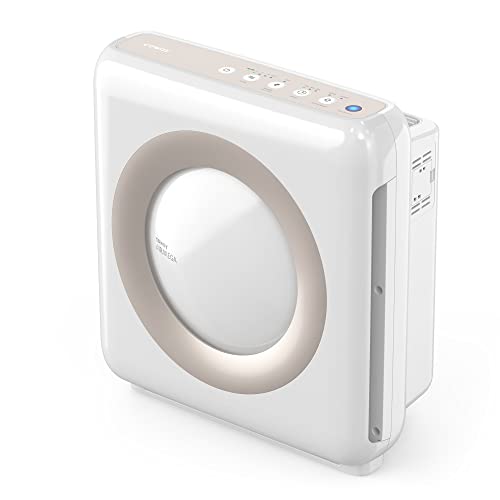
Best Selling Air Purifier


Levoit Air Purifier

You can find out more about the Levoit Purifier on Amazon.

As an Amazon Associate I earn from qualifying purchases.

  • About
  • Contact Us
  • Privacy Policy